
3D Manufacturing Basics: Where 3D Printing Fits In
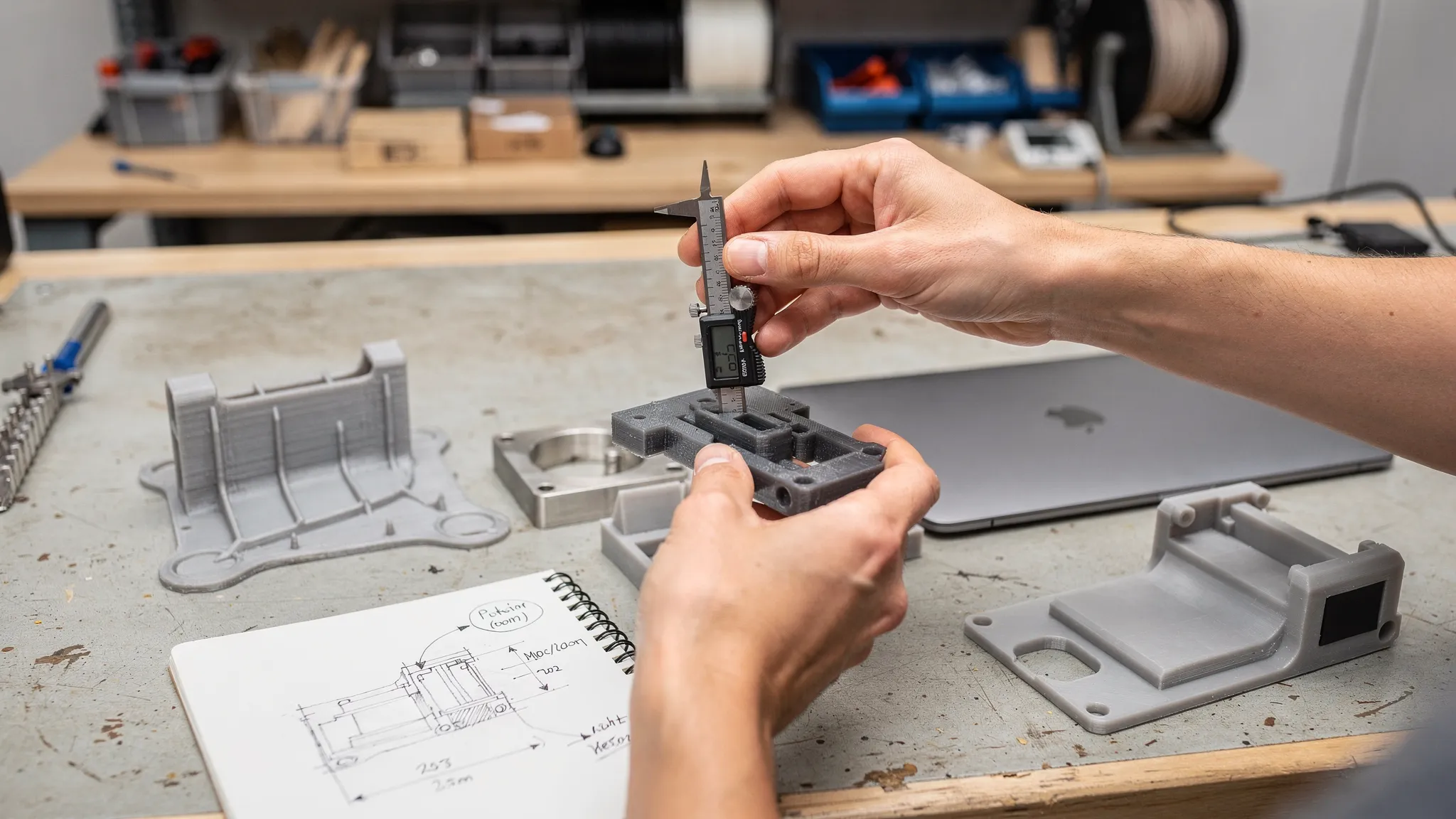
If you are new to product development, “3D manufacturing” can sound like it means “3D printing.” In practice, 3D manufacturing is the bigger umbrella: it includes every method used to turn a design into a real object, from CNC machining to molding to additive manufacturing. 3D printing is one of the most flexible tools in that toolbox, but it is not the right tool for every job.
This guide breaks down the basics of 3D manufacturing, then shows exactly where 3D printing fits best, where it struggles, and how teams often combine it with traditional processes to hit cost, quality, and timeline targets.
What “3D manufacturing” actually means
At its simplest, 3D manufacturing is producing a physical, three-dimensional part from a design, with a controlled process that aims for repeatable results (even if the run size is one unit).
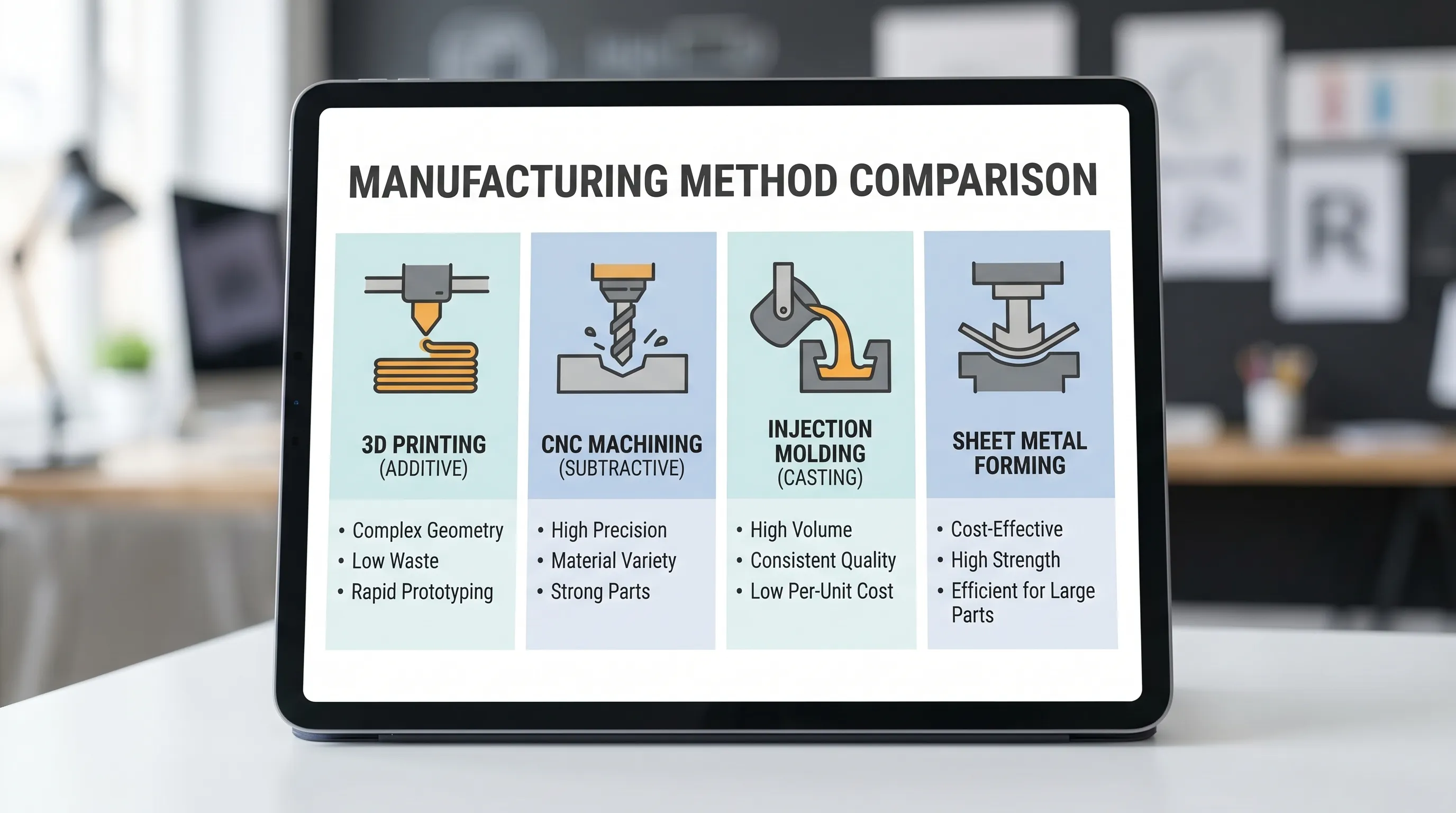
Most manufacturing methods fall into a few families:
- Additive: build the part layer by layer (this is 3D printing).
- Subtractive: remove material from a blank (CNC milling, turning, routing).
- Forming: deform material into shape (bending, stamping, forging).
- Casting and molding: pour or inject material into a cavity (urethane casting, injection molding).
- Joining and assembly: weld, bond, fasten, or otherwise combine parts.
Additive manufacturing is standardized as a term in industry, see ISO/ASTM terminology references like ISO/ASTM 52900 (Additive manufacturing vocabulary).
The manufacturing “fit” question: what are you optimizing for?
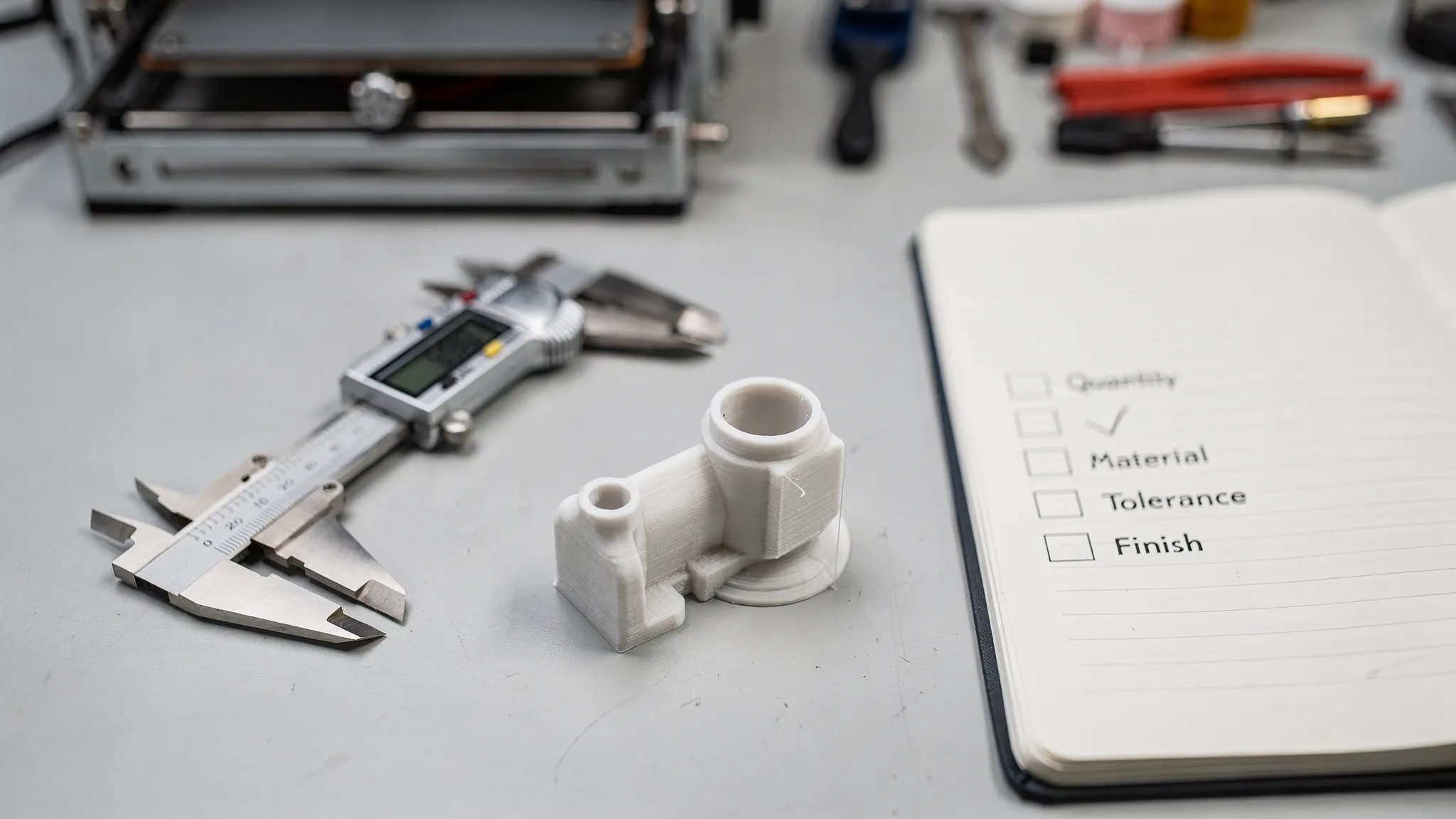
Before you pick a process, define what success looks like. Most real-world decisions come down to a small set of trade-offs:
- Quantity: one-off, small batch, or mass production.
- Geometry: simple prismatic shapes vs complex internal channels and organic surfaces.
- Material and performance: strength, heat resistance, UV resistance, flexibility, chemical exposure.
- Tolerance and surface finish: what needs to be tight, what needs to look premium.
- Lead time: days vs weeks.
- Unit cost vs upfront tooling cost: pay more per part (no tooling) vs invest in a mold/fixture to lower unit cost.
3D printing tends to win when you value flexibility and speed over the lowest possible unit cost.
Where 3D printing fits in 3D manufacturing
3D printing is most often the best choice when you need fast iteration, customization, or complex geometry, especially at low to moderate quantities.
1) Prototyping (form, fit, and function)
This is the classic use case, but it is broader than “looks-like” mockups.
- Form prototypes: size and appearance, design reviews, photos, sales samples.
- Fit prototypes: verify clearances, interfaces, mounts, and assemblies.
- Functional prototypes: test load paths, latches, clips, airflow, fluid routing, and wear.
3D printing is valuable here because the “tooling” is digital. Change the CAD, print again, and learn quickly.
2) Bridge manufacturing and low-volume end-use parts
If you need 10, 50, or 300 parts, 3D printing can be the fastest path to real inventory while you validate demand, work out packaging, or wait on longer-lead processes.
It is especially common for:
- Niche consumer products
- Replacement parts
- Accessories and mounts
- Enclosures and brackets
- Specialty fixtures in small operations
3) Tooling, jigs, fixtures, and aids (the quiet productivity boost)
Many teams use 3D printing to improve other manufacturing processes.
Examples include drill guides, assembly fixtures, soft jaws, check gauges, paint masks, and ergonomic handling tools. These parts are often not customer-facing, so the priority is speed and utility.
4) Mass customization
When every customer needs a slightly different geometry, traditional tooling becomes expensive or slow.
3D printing supports customization because it does not require a new mold for each variant. This is why additive shows up in orthotics, personalized wearables, and made-to-order components.
5) Complex geometry that is hard to machine or mold
Even in plastics, geometry can dictate process choice. Internal channels, lattice structures, and topology-optimized shapes are areas where additive can outperform conventional methods.
Where 3D printing is usually not the best fit
Knowing the limits is part of “manufacturing basics,” and it helps you avoid expensive detours.
High-volume production with tight unit cost targets
If you need tens of thousands of identical parts and the geometry is mold-friendly, injection molding often wins on unit cost and cycle time after tooling is built.
Extreme tolerances across many critical dimensions
3D printing can achieve excellent results, but if your design needs consistently tight tolerances on multiple features (for example precision bearing bores and sealing surfaces in the same part), CNC machining or post-machining steps may be required.
Certain surface and cosmetic requirements
Additive parts can be finished, but “straight off the machine” surfaces often need post-processing for premium consumer-facing aesthetics. If a flawless gloss finish is required at scale, molding plus surface texturing may be more efficient.
High-heat, harsh chemical, or regulatory-critical applications
Some additive materials perform very well, but material selection and validation matter. For medical, aerospace, and safety-critical parts, process qualification and traceability become central, and the best process may change.
A practical comparison: 3D printing vs common alternatives
Use the table below as a quick mental model. Real projects vary, but these patterns hold in most shops.
| Process family | Best at | Typical trade-offs | Common fit |
|---|---|---|---|
| 3D printing (additive) | Fast iteration, complex shapes, customization, low tooling | Per-part cost higher at scale, surface finish may need work, orientation affects strength | Prototypes, low-volume parts, fixtures, complex geometry |
| CNC machining (subtractive) | Precision features, strong isotropic materials, good surface finishes | Material waste, complex internal geometry is hard, can be slower for many design changes | Functional prototypes, precision parts, metal parts, post-machining printed parts |
| Injection molding (molding) | Lowest unit cost at high volume, consistent cosmetics | High upfront tooling cost, changes are expensive, design constraints for draft and undercuts | Mass production, consumer parts, repeatable high-volume runs |
| Casting (incl. urethane casting) | Small batch with molded-like feel, good cosmetics | Tooling still required, material set may be limited vs injection, lead time | Bridge manufacturing, small runs that need molded aesthetics |
| Sheet metal forming | Strong lightweight enclosures, fast for certain geometries | Limited 3D complexity, bends and fasteners drive design | Brackets, panels, chassis, enclosures |
How teams combine 3D printing with traditional manufacturing
In real 3D manufacturing workflows, it is rarely “additive or nothing.” Hybrid approaches are common:
Print first, then machine critical features
You can 3D print a near-net-shape part and then machine holes, mating faces, or threads where you need tight tolerances. This is a practical way to blend complex geometry with precision.
Print to validate the design, then switch processes
A typical product path looks like:
- 3D print prototypes to confirm fit and function
- 3D print a short run to validate demand (or ship early units)
- Move to molding, casting, or machining for long-term scaling
This reduces risk because you avoid paying for tooling before the design is stable.
Use printed tooling to speed up other processes
For example, printed fixtures can improve repeatability in drilling, bonding, or inspection. Even if your end product is not printed, additive can still reduce lead time and labor.
What to consider before choosing 3D printing for a part
If you are deciding whether 3D printing belongs in your plan, answer these questions up front.
Quantity and revision rate
If you expect frequent revisions, 3D printing is often the lowest-friction option. If the design is locked and volumes are high, explore tooling-based processes.
Material and environment
Be clear about what the part experiences:
- Temperature range
- UV exposure
- Outdoor moisture
- Load type (static load, impact, fatigue)
- Contact with oils, cleaners, fuels
This is where “multiple material options” matters. The right polymer or resin choice can be the difference between a durable part and a brittle one.
Strength direction and orientation
Many printed parts are strongest in certain directions due to layer-based construction. Designing with that reality in mind improves results.
Post-processing and total lead time
Printing is only part of the timeline. Supports removal, sanding, curing (for resins), and painting or coating can be a meaningful portion of the schedule.
A simple decision shortcut (without the jargon)
If you are stuck, this rule-of-thumb is useful:
- Choose 3D printing when you need complex geometry, customization, or low volumes fast.
- Choose CNC machining when precision surfaces and tight tolerances dominate.
- Choose molding or casting when the design is stable and unit cost at volume matters most.
If you are unsure, a good next step is requesting a quote with your intended use and quantity, because manufacturability and cost are highly geometry-dependent.
Real-world context: 3D printing alongside retail and repair
3D manufacturing shows up in places you might not expect. Retailers and service shops often rely on a mix of products, replacement parts, and repair workflows. For example, sports and outdoor stores may need custom fixtures, display mounts, or hard-to-source replacements for older gear.
If you are curious about the kind of curated, service-oriented retail ecosystem that often benefits from these behind-the-scenes manufacturing aids, see the Fabbrica Ski Sises online shop and its mix of apparel, sporting goods, and equipment services.
Where Firecloud Printz fits in your manufacturing workflow
If you already have a 3D model (or even a concept you are working toward), Firecloud Printz can help you turn it into a physical part with high-detail custom 3D printing and support for both ready-made designer-authorized prints and custom orders. If your goal is to learn fast, validate fit, or produce a small batch without investing in tooling, a print service is often the most direct on-ramp into 3D manufacturing.
Frequently Asked Questions
Is 3D printing the same as 3D manufacturing? 3D printing is one method within 3D manufacturing. 3D manufacturing includes additive, subtractive (CNC), molding/casting, forming, and assembly.
When is 3D printing better than CNC machining? 3D printing is often better for complex geometry, rapid iteration, and low-volume parts. CNC is often better when you need tight tolerances, great surface finish, or specific engineering materials.
Can 3D printing be used for production parts? Yes, especially for low-volume production, bridge manufacturing, customization, and specialized geometries. For high-volume, identical parts, molding is often more cost-effective.
What information should I provide to get an accurate 3D printing quote? Share your 3D file (STL/3MF where possible), target quantity, intended use (display vs functional), material preferences if any, and any critical dimensions or tolerance requirements.
Bring your design into the real world
If you want to see where your project fits on the 3D manufacturing spectrum, start with a small, high-quality print. Visit Firecloud Printz to browse designer-authorized products or request a custom print so you can validate your idea with a real part in hand.
