
Additive Printing Explained: Materials, Uses, and Benefits
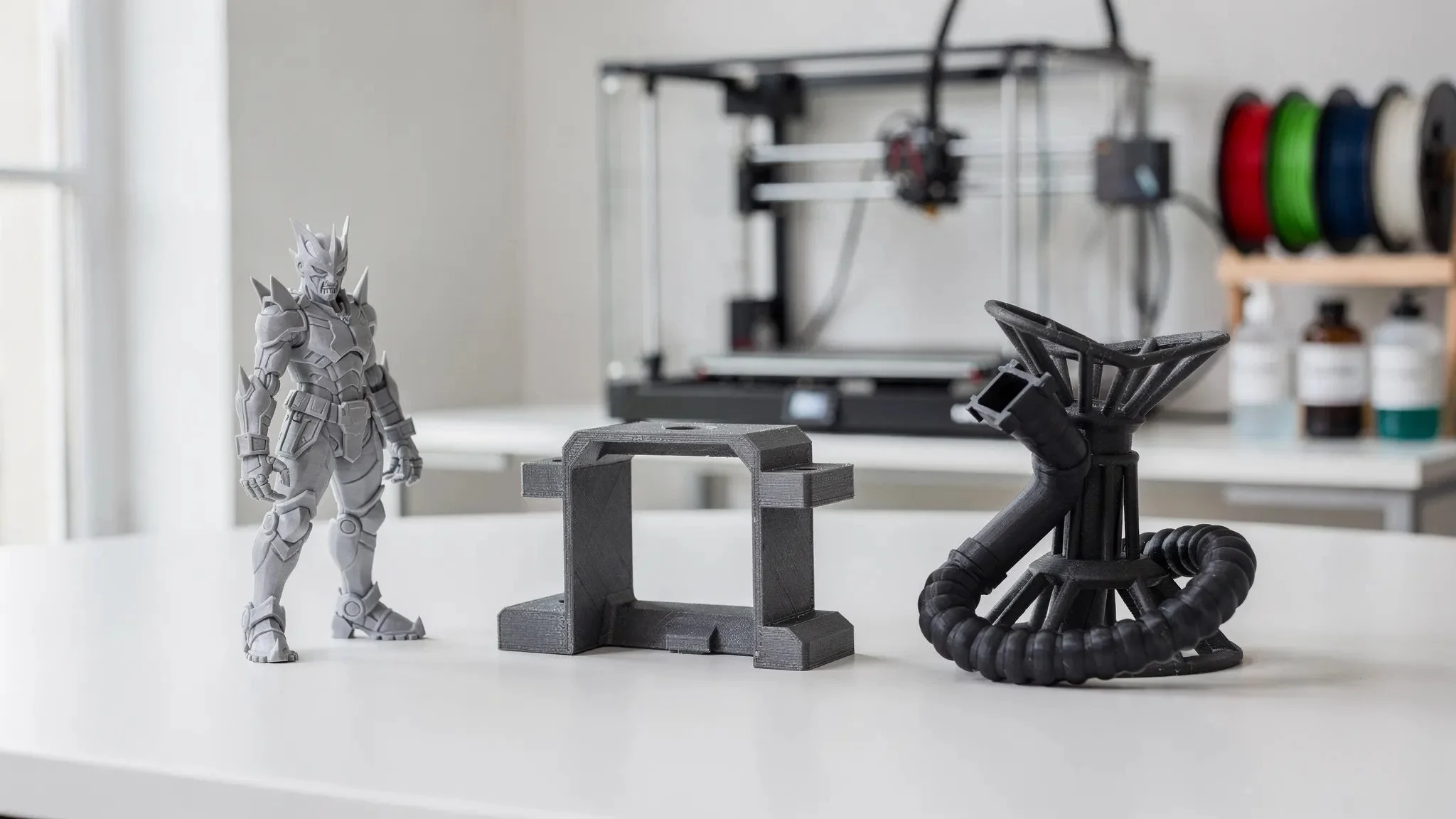
Additive printing (often called 3D printing) has moved far beyond “cool prototypes.” Today it is a practical way to produce functional parts, custom products, and designer collectibles with short lead times and impressive detail. But the results you get depend heavily on one thing: choosing the right process and material for the job.
This guide explains additive printing in plain English, with an emphasis on materials, common uses, and the benefits (and limits) you should know before you place an order.
What is additive printing?
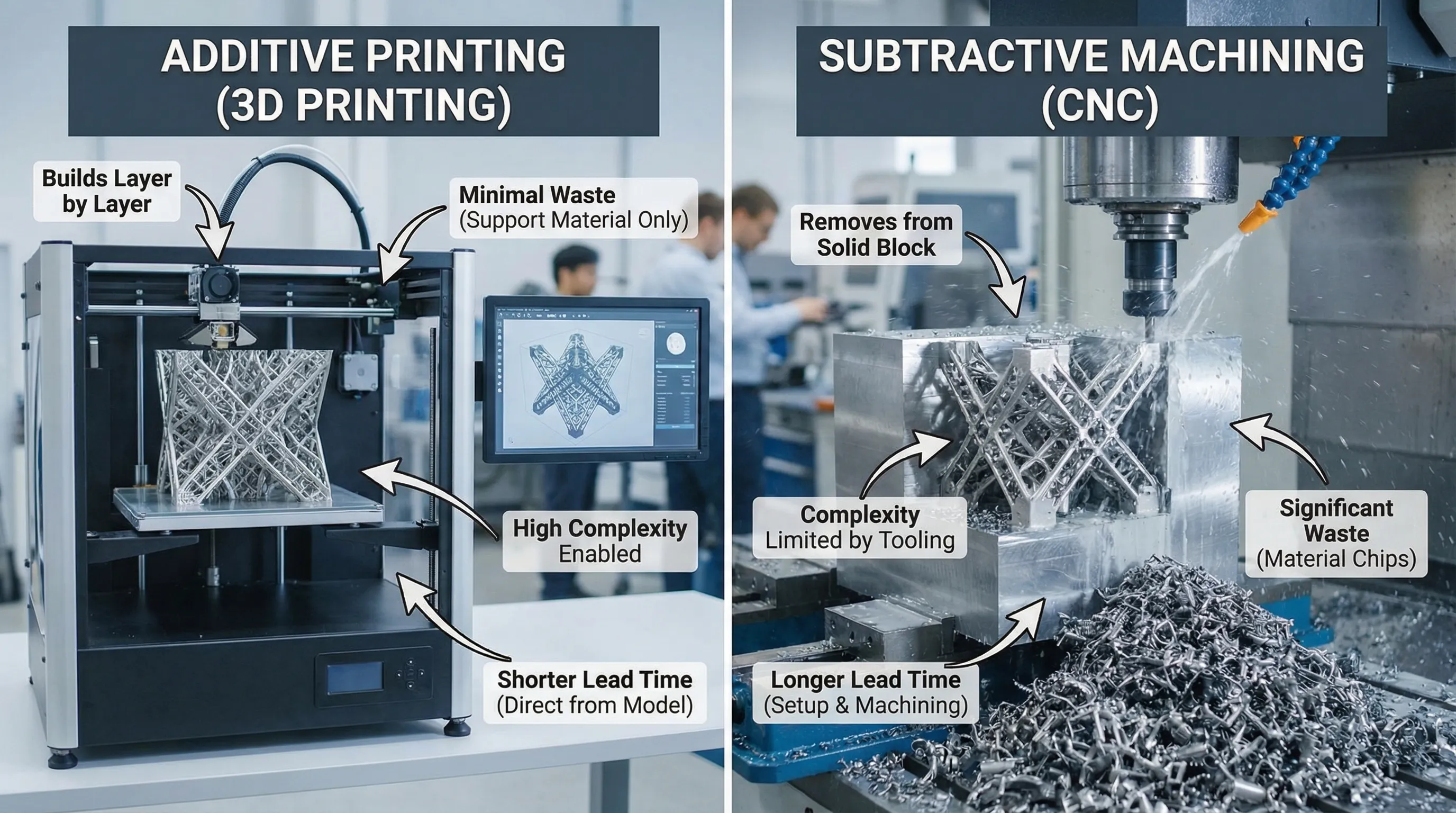
Additive printing is a manufacturing method that builds an object layer by layer from digital 3D model data. That’s the key difference from subtractive manufacturing (like milling), where material is removed from a larger block.
In industry, “additive manufacturing” is formalized through standards such as ISO/ASTM 52900, which defines terminology and categories for additive processes. If you want the formal definitions, see the standard overview from ASTM International and related documentation from ISO.
Additive vs subtractive manufacturing (quick mental model)
- Additive printing: adds material only where needed, enabling internal channels, lattice structures, and complex geometry.
- Subtractive machining: removes material to reach the final shape, often achieving excellent tolerances and surface finish but with more geometric constraints.
The main additive printing processes (and when they’re used)
Not all 3D printing is the same. Processes differ in accuracy, strength, surface finish, and cost. Here are the most common categories you will see when ordering parts.
| Process (common name) | How it works | Typical materials | Best for | Key tradeoffs |
|---|---|---|---|---|
| Material extrusion (often FDM/FFF) | A heated nozzle deposits melted thermoplastic | PLA, PETG, ABS, ASA, TPU (varies by provider) | Durable prototypes, fixtures, larger parts | Visible layer lines, supports for overhangs |
| Vat photopolymerization (often SLA/MSLA/DLP) | Liquid resin is cured by light | Photopolymer resins (standard, tough, flexible, castable, etc.) | High-detail parts, minis, aesthetic prototypes | UV sensitivity over time, post-curing and washing needed |
| Powder bed fusion (often SLS for polymers) | A laser fuses powder layer by layer | Nylon (PA12/PA11), TPU in some systems | Strong parts, complex geometry without supports | Grainy surface, more industrial workflow |
| Binder jetting | Binder “glues” powder, then part is cured/sintered (material-dependent) | Sand, metals, ceramics (system-dependent) | High volume, some metal workflows | Strength depends on post-processing |
| Metal fusion (often DMLS/SLM) | Laser melts metal powder | Stainless steel, aluminum, titanium, etc. | End-use metal parts | Higher cost, heat stress, post-processing required |
If you are ordering from a service provider, you do not need to memorize acronyms. What matters is explaining your end use (strength, appearance, heat, flexibility), and letting the provider recommend the best-fit option.
Additive printing materials: how to choose
Material selection is where most “great print” versus “wrong print” outcomes are decided. Below are the major material families and the questions to ask before you commit.
Thermoplastics (common in material extrusion)
Thermoplastics are popular because they are practical, cost-effective, and available in many colors and blends.
Good fit when you need: functional prototypes, housings, brackets, jigs, moderate strength, and reasonable heat resistance (depending on polymer).
A few practical considerations:
- Heat: Some plastics soften earlier than others. If the part sits in a hot car, near electronics, or outdoors, say so.
- Impact and fatigue: If it will be dropped, clipped, or flexed repeatedly, mention that too.
- Outdoor exposure: UV and moisture matter for outdoor parts.
Resins (common in vat photopolymerization)
Resins are unmatched for fine detail and surface finish, which is why they’re widely used for miniatures, prototypes for visual review, and intricate components.
Good fit when you need: sharp features, smooth surfaces, small text, ornamental detail.
Notes to keep in mind:
- Resin parts usually require washing and post-curing, and they can be more sensitive to prolonged UV exposure.
- “Tough” and “flexible” resin families exist, but properties vary widely by formulation.
Nylon and other powders (common in polymer powder bed fusion)
Powder-based nylon parts are often chosen for strength, wear resistance, and complex shapes (because many powder processes do not require traditional supports).
Good fit when you need: functional end-use polymer parts, living-hinge-like behavior (design-dependent), complex internal geometry.
Specialty and composites (provider-dependent)
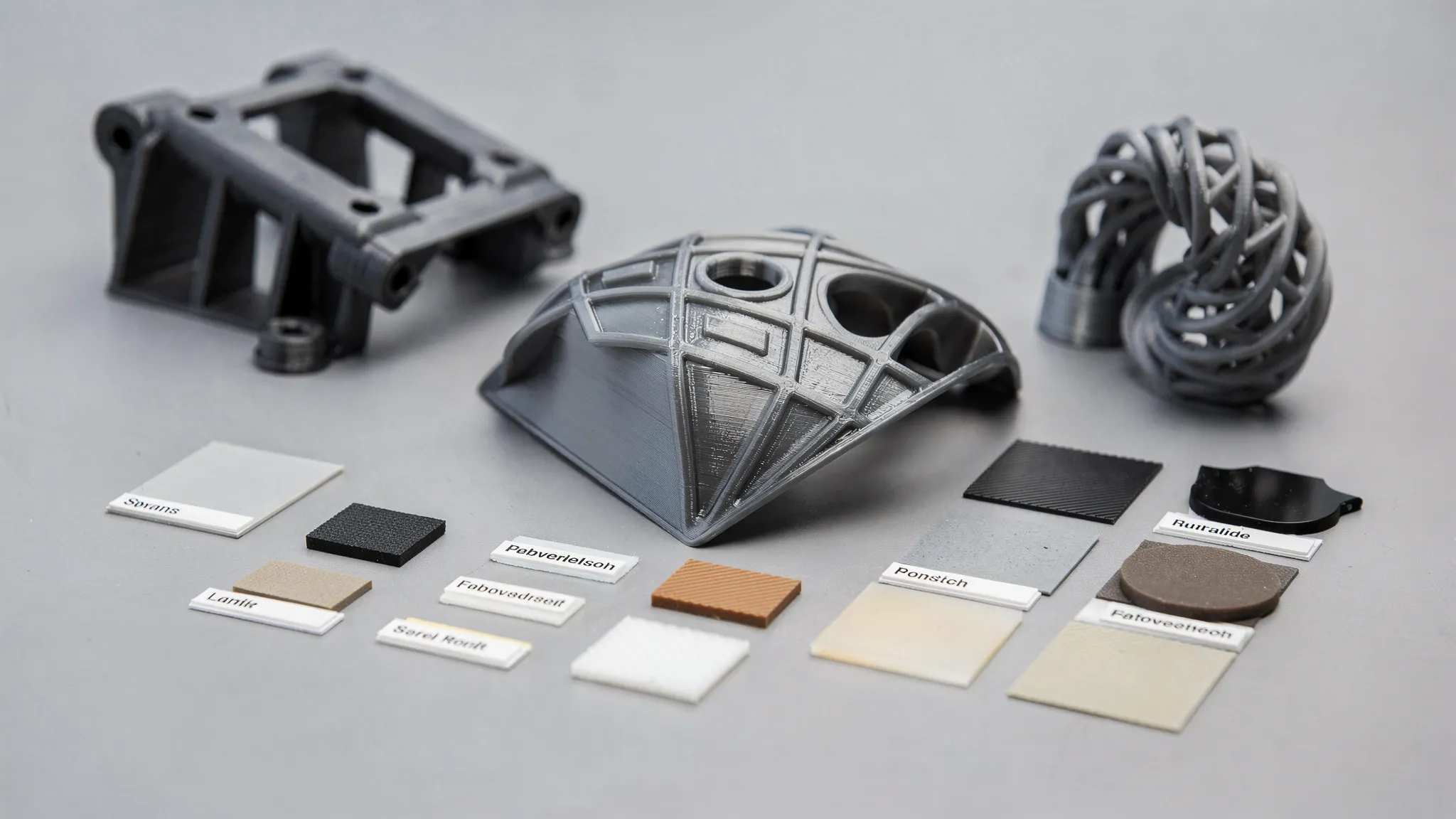
Depending on the shop, you may also see carbon-fiber-filled materials, ESD-safe variants, high-temperature polymers, and more. These can be excellent, but they are also more sensitive to print settings and design rules.
A practical material selection checklist
Instead of guessing, answer these questions before you request a quote:
- Will the part be load-bearing, and in what direction is the load applied?
- What is the temperature range (including storage and shipping conditions)?
- Does it need flexibility or rigidity?
- Is surface finish a primary goal (display piece) or secondary (hidden bracket)?
- Will it be indoors or outdoors?
- Do you need tight tolerances for mating parts?
Common uses of additive printing (real-world examples)
Additive printing is used everywhere from hobby projects to manufacturing floors. The best use cases share one theme: they benefit from speed, customization, or geometry that is difficult to machine.
Product development and prototyping
This is still the most common use case.
- Form and fit checks: confirm size, ergonomics, and assembly.
- Iteration loops: print a revision, test it, tweak the model, print again.
- Stakeholder reviews: a physical part communicates faster than renders.
Manufacturing aids: jigs, fixtures, and tooling
Additive printing is excellent for low-volume, task-specific tools, such as:
- Assembly fixtures
- Drill guides
- Test adapters
- Alignment and positioning aids
These tools can reduce downtime because you can replace or improve them quickly.
End-use parts and short-run production
For certain geometries and volumes, additive printing can be a strong choice for end-use parts, especially when:
- You need small batches or frequent design updates.
- You want on-demand production instead of stocking inventory.
- The design benefits from complex internal features.
Art, collectibles, and designer-authorized prints
Additive printing also powers highly detailed display pieces, props, miniatures, and decor. If you are buying or selling designer models, licensing matters. Working with a provider that offers designer-authorized products helps ensure creators are compensated and customers receive legitimate prints.
Benefits of additive printing
Additive printing is not “better” than every other method, but it is uniquely strong in specific areas.
Faster iteration and shorter lead times
Because you do not need to fabricate molds or complex tooling for each revision, you can move from CAD to a physical object quickly.
Customization without retooling
Personalized sizes, names, variants, or one-off geometries are natural fits. Customization is often just a change in the file, not a change in the manufacturing setup.
Complex geometry is often “free”
Features like internal channels, lattice infill strategies, and organic shapes can be difficult or expensive to machine. In additive printing, complexity often adds less cost than it would in traditional processes.
Material efficiency and less waste (in many cases)
Subtractive methods can produce significant scrap. Additive printing places material where it is needed, which can reduce waste for certain workflows. This is one reason additive can support more sustainable production strategies, especially when paired with smart orientation, right-sizing, and on-demand output.
For broader context on sustainability and additive manufacturing, the U.S. Department of Energy and NIST publish research and resources on advanced manufacturing methods and efficiency.
Limitations (and how to design around them)
Knowing the limits upfront helps you avoid surprises.
Layer lines and surface finish
Many processes show layers, especially on curved surfaces. Solutions include choosing a higher-detail process, adjusting orientation, or planning post-processing (sanding, priming, painting).
Strength depends on orientation
In layer-based manufacturing, strength can be direction-dependent. If a part will be pulled, bent, or torqued, tell your provider how it will be loaded so they can recommend orientation and material.
Supports, overhangs, and thin features
Some designs need supports, which can leave marks or require cleanup. Very thin walls and tiny pins can also be fragile depending on the process.
Tolerances and fit
Additive printing can achieve excellent results, but “snap fit” and press-fit assemblies usually require intentional clearances and testing. If your part must mate with an existing component, share measurements and the fit requirement.
A quick guide: matching goals to process
Use this as a starting point when you are not sure what to request.
| Your main goal | Often a good starting process | Notes to mention when requesting a quote |
|---|---|---|
| Best visual detail (miniatures, display parts) | Vat photopolymerization (resin) | Surface finish expectations, brittleness concerns |
| General-purpose functional prototype | Material extrusion (thermoplastic) | Heat exposure, load direction, desired toughness |
| Strong functional polymer part with complex geometry | Polymer powder bed fusion (nylon) | Wear/friction, mating tolerances, surface texture |
| Flexible or rubber-like behavior | Flexible resin or TPU-style thermoplastic (process-dependent) | Shore hardness target (if known), flex frequency |
What to send a 3D printing service for the best results
A smooth order starts with clear inputs. Most providers can work with common 3D formats (often STL/3MF/OBJ), but requirements vary.
Send:
- The 3D file (or describe your idea if you need it printed from an existing design)
- Target dimensions and any critical measurements
- Intended use (display, load-bearing, outdoor, heat exposure)
- Material preference (if any) and color preference (if relevant)
- Quantity and deadline
If you are unsure, you can still request an estimate with what you have. A good shop will ask the right follow-up questions.
Frequently Asked Questions
Is additive printing the same as 3D printing? Additive printing is commonly used to describe 3D printing. “Additive manufacturing” is also used in industry to refer to standardized process categories that build parts layer by layer.
What material is best for my part? It depends on function. If you need high detail for a display piece, resin is often a strong option. If you need a practical bracket or housing, a thermoplastic is often a better fit. Share heat, load, and environment details for the best recommendation.
How durable are additive printed parts? Many printed parts are quite durable, but durability depends on the process, material, geometry, and print orientation. If the part will be stressed mechanically, design and orientation choices matter as much as material.
Is additive printing good for small batch production? Yes, especially when you want short runs, frequent revisions, or multiple variants without tooling. For high volumes of simple parts, traditional manufacturing can still be more cost-effective.
What file format should I use? Many services accept common mesh formats like STL, 3MF, or OBJ. If you are not sure what to export, ask your provider which format they prefer and whether they need units specified.
Bring your design to life with Firecloud Printz
If you are ready to turn a digital model into a physical part, or you want a designer-authorized print from a curated shop, Firecloud Printz offers custom 3D printing and ready-made products with an emphasis on detail and efficient turnaround.
To get started, visit Firecloud Printz and request an estimate with your file (or your idea and requirements). The more you share about the part’s use, material needs, and finish expectations, the easier it is to recommend the right additive printing approach.
