
Additive Manufacturing 3D Printing: What Businesses Use it For
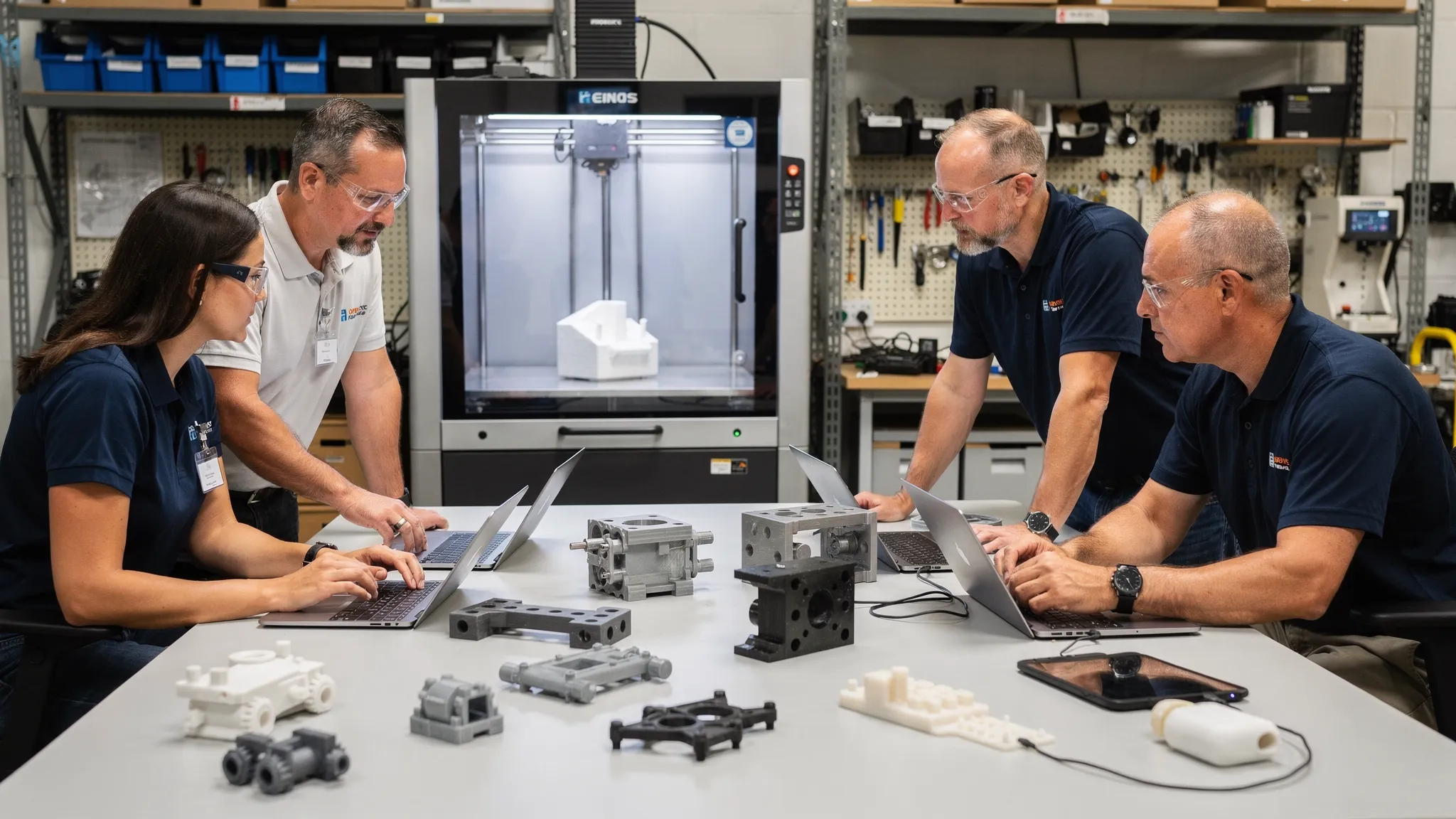
Businesses have been using additive manufacturing (3D printing) for years, but the conversation has shifted. It is no longer just a prototyping novelty. Today, teams use it to shorten product cycles, reduce tooling bottlenecks, keep legacy equipment running, and deliver customization that would be impractical with conventional manufacturing.
If you are evaluating additive manufacturing 3D printing for your organization, the key question is not “Can we print this?”, it is “Where does printing create a measurable advantage in our workflow?”
What additive manufacturing means in a business context
Additive manufacturing builds parts layer by layer from a digital file. That basic difference (adding material instead of subtracting it, molding it, or stamping it) is what unlocks its business value:
- No dedicated tooling required for many geometries
- Geometry is “cheap” relative to traditional methods (complexity often adds less cost than with machining or molding)
- Iteration is fast because design changes are digital
- Production can be localized or on-demand, reducing storage and shipping needs
For a neutral overview of additive manufacturing in industry, the U.S. National Institute of Standards and Technology (NIST) maintains a helpful AM resource hub that explains processes, measurement, and qualification considerations: NIST Additive Manufacturing.
What businesses use additive manufacturing 3D printing for (the practical categories)
Most real business wins fall into a few repeatable use cases. The same printer and material might support several of these categories, but the success metrics are different.
1) Rapid prototyping that actually accelerates decisions
Prototyping is the most common entry point because it is easy to justify. The advantage is not just speed, it is faster decision-making across design, engineering, marketing, and leadership.
Common business prototypes include:
- Form and fit models for packaging, assembly checks, and ergonomics
- Functional prototypes for early testing (within the limits of the chosen process and material)
- Appearance models for stakeholder buy-in, photography, and sales demos
Where it pays off: when your team is stuck in “CAD debates,” a physical part often resolves issues in one meeting.
2) Jigs, fixtures, and workholding that remove production bottlenecks
This is one of the highest ROI applications because it directly affects throughput and quality.
Examples include:
- Drill guides and alignment tools
- Assembly fixtures that improve repeatability
- Inspection gauges and poka-yoke aids
- Custom soft jaws and protective nest fixtures
The business benefit is typically less downtime, fewer reworks, and safer, more consistent operator steps.
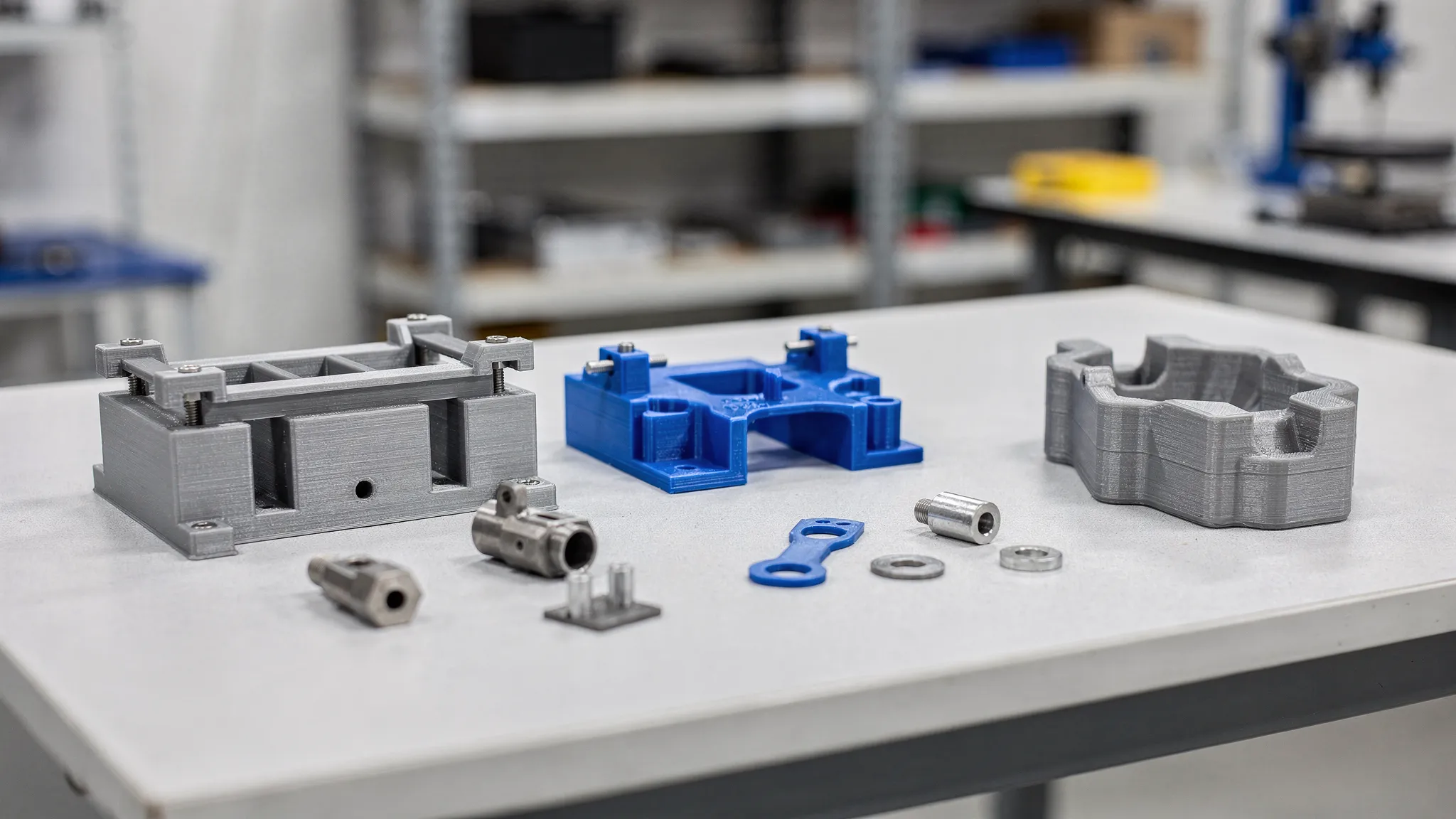
3) Low-volume end-use parts when traditional methods are a mismatch
Additive manufacturing can be a strong option when you need:
- Low quantities
- Frequent design revisions
- Complex geometry
- A short timeline
Common examples:
- Enclosures, brackets, mounts, and cable management parts
- Robotics and automation components
- Custom adapters for equipment integration
- Small batch replacement parts for niche products
Where it pays off: when injection molding tooling, casting patterns, or multi-axis machining would take too long or require too much up-front spend for the volumes you need.
4) Bridge manufacturing between prototype and scaled production
Many teams underestimate the “in-between” phase. You have demand, but not enough confidence to invest in hard tooling, or you need parts while tooling is being built.
Additive manufacturing can fill that gap so you can:
- Start selling earlier
- Collect real-world feedback before locking a design
- Avoid overproducing inventory
This is particularly useful for hardware startups, new product launches inside larger companies, and seasonal products.
5) Mass customization and personalization
When every unit is different (or when customers pay extra for personalization), additive manufacturing shines.
Business examples:
- Personalized consumer products (nameplates, custom-fit accessories)
- Configurable components for industrial customers
- One-off tools sized to an operator, station, or process
Where it pays off: when your value proposition depends on offering variations without creating SKU chaos.
6) Maintenance, repair, and operations (MRO) and hard-to-source spares
Spare parts are expensive in a different way. They tie up capital, take up space, and still might not be available when needed.
Additive manufacturing can support:
- Low-volume replacement parts for discontinued equipment
- Protective covers, bumpers, and guards
- Adapters that allow a modern component to interface with older hardware
This is often a risk-management win: fewer line stoppages because a small plastic component is missing.
7) Sales enablement, trade shows, and customer communication
Physical models help customers understand what you sell.
Typical business uses:
- Cutaway models to show internal channels or assemblies
- Scale models for large equipment
n- Demo units that are lighter and safer than metal counterparts
This can shorten sales cycles and reduce misunderstandings in custom projects.
Industry examples: where additive manufacturing shows up in real workflows
The “best” use case depends on your industry constraints, especially lead time, compliance needs, and how often designs change.
Manufacturing and industrial automation
- Cell-specific fixtures and sensor mounts
- Cable routing clips and protective covers
- Quick redesigns as a line evolves
Healthcare and life sciences
- Anatomical models for surgical planning and patient education
- Device prototyping and ergonomic evaluation
Note: regulated end-use parts require stricter validation, documentation, and material controls than general prototyping.
Consumer products and e-commerce brands
- Pre-production samples for influencer content and product photos
- Fit checks for packaging and inserts
- Customized accessories and limited editions
Apparel and soft goods (product development support)
Even when the final product is sewn, apparel brands often need rigid components and development aids, for example:
- Hardware prototypes (buckles, toggles, closures)
- Fit and drape evaluation tools, forms, and patterning aids
- Sampling components for small-batch runs
If your project goes beyond printed components into full apparel development, working with a specialized manufacturing partner can speed up the path to production. For example, a full-service apparel development and manufacturing partner can support patterning, sampling, sourcing, and small-batch to scaled production.
How to choose the right business use case (a simple decision table)
Different departments buy into 3D printing for different reasons. Align your project with a measurable outcome.
| Business goal | Best-fit 3D printing use case | What to measure | What success looks like |
|---|---|---|---|
| Reduce development cycle time | Prototype iterations | Days per iteration, number of design loops | Fewer meetings debating, faster sign-off |
| Increase production throughput | Jigs and fixtures | Rework rate, takt time impact, downtime | More consistent assembly and fewer errors |
| Avoid tooling risk | Bridge manufacturing | Time to first shippable units | Revenue earlier, fewer tooling-driven delays |
| Reduce SKU complexity | Customization | Unique variants delivered, returns rate | Personalization without inventory overhead |
| Reduce operational risk | MRO spares and adapters | Hours of downtime avoided | Fewer stoppages from missing small parts |
| Improve sales clarity | Demo models | Sales cycle length, customer questions | Better demos, fewer miscommunications |
What to prepare before you order (so you get a useful quote and a usable part)
A business-focused additive manufacturing project brief typically includes:
- Part purpose (prototype, fixture, end-use, demo model)
- Quantity and timeline (one-off, small batch, ongoing)
- Critical features (holes, mating surfaces, snap fits, threads)
- Environment (heat, UV, chemicals, indoor, outdoor)
- Load expectations (hand force, vibration, impact, static load)
- Finish requirements (cosmetic, paint-ready, texture, color)
- Compliance constraints (if any, such as biocompatibility needs for medical evaluation models)
If you want a deeper explanation of processes and materials, Firecloud Printz already has a dedicated guide that breaks down common technologies and selection considerations: Additive Printing Explained: Materials, Uses, and Benefits.
Common pitfalls businesses run into (and how to avoid them)
Treating 3D printing like “magic” instead of a manufacturing process
Additive manufacturing still has rules: tolerances, orientation effects, and post-processing time. The fix is to define what matters most (function, cosmetics, lead time, cost) and design for that priority.
Not planning for post-processing
Many parts need support removal, sanding, curing, or other finishing. If the part is customer-facing, the finishing plan is often as important as the print itself.
Underestimating the value of fixtures and internal tools
Some organizations focus only on products. In practice, internal tooling is where additive manufacturing 3D printing can generate the quickest operational wins.
Where Firecloud Printz fits
If you have a clear business use case (prototype, fixture, short-run production, or a customer-facing model), Firecloud Printz provides custom 3D printing services built around high-detail output and efficient turnaround. You can also browse a curated shop of designer-authorized prints and place orders through an online cart with secure payments.
When you are ready, start with a quick estimate and share the basic project brief (purpose, quantity, deadline, and any constraints). That is usually enough to confirm feasibility and recommend an approach.
Frequently Asked Questions
What is additive manufacturing 3D printing used for in businesses most often? Most businesses start with rapid prototyping, then expand into jigs and fixtures, bridge manufacturing, and low-volume end-use parts once they see repeatable ROI.
Is additive manufacturing only useful for prototyping? No. Many companies get major value from printed fixtures, inspection aids, and MRO spares because these tools reduce downtime and improve process consistency.
When does 3D printing make more sense than injection molding? 3D printing is often a better fit for low volumes, fast design changes, and complex geometry. Injection molding usually wins at high volumes where tooling cost is amortized.
How do I pick the right first project for additive manufacturing? Choose something with a clear metric (days saved, downtime avoided, rework reduced) and low regulatory risk, like an assembly fixture, inspection gauge, or a prototype that needs fast iteration.
Can Firecloud Printz print from my CAD file? If you have a standard 3D file format, you can typically submit it for review and quoting. Include the part’s purpose and requirements so the quote reflects real-world use.
Get a fast estimate for your next business print
If you are evaluating additive manufacturing for a specific business need, Firecloud Printz can help you move from file to finished part without long tooling lead times. Visit Firecloud Printz to request a custom estimate or browse designer-authorized products in the shop.
