
Ideas 3D Print: Popular Projects People Actually Use
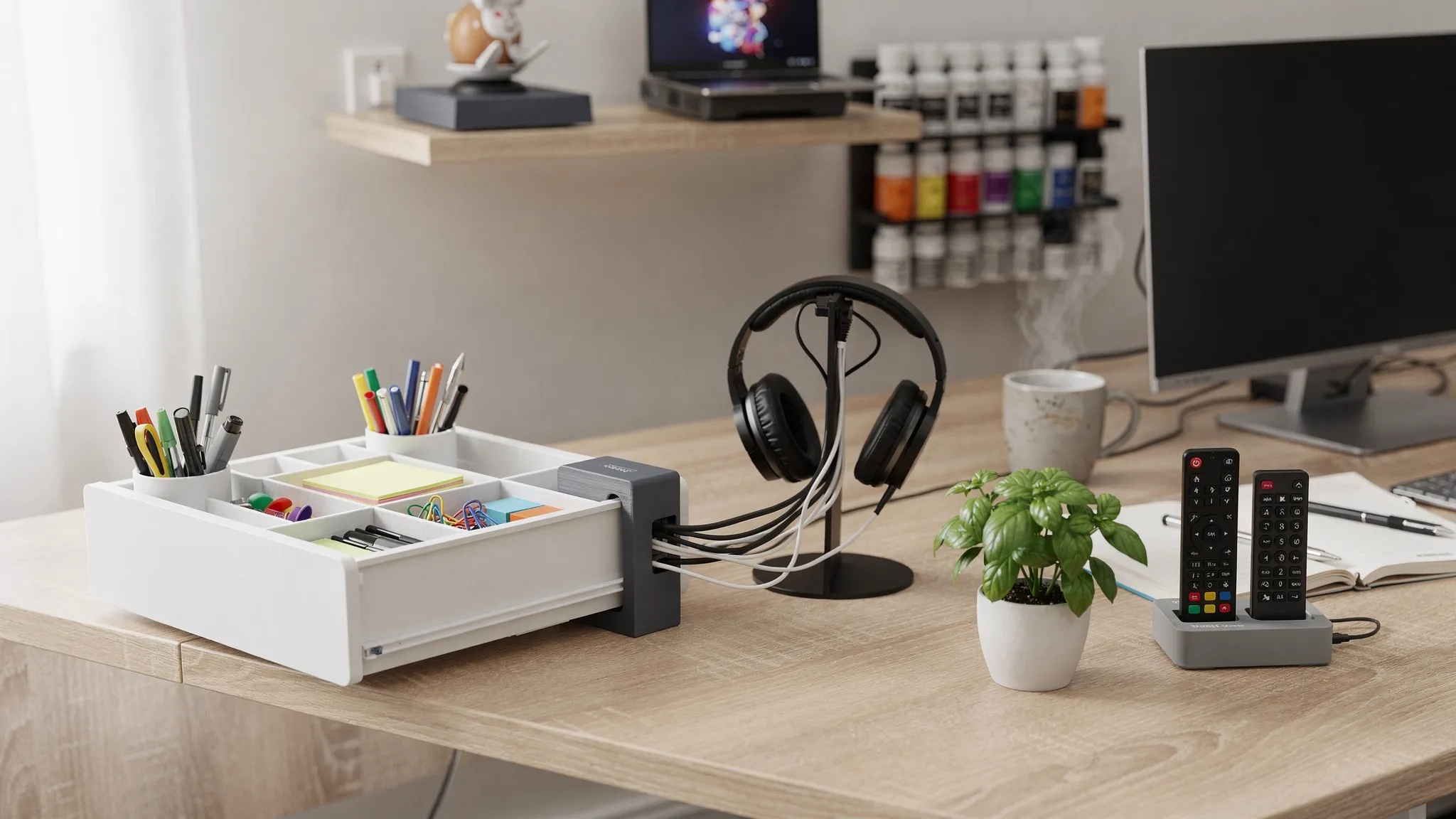
If you have a folder full of saved models but nothing you use after the first week, you are not alone. The best 3D print projects are rarely the flashiest. They are the ones that solve a tiny problem, fit your exact space, replace a missing part, or make a hobby easier every time you sit down to work on it.
If your search started with ideas 3D print, the real question is not what can be printed. It is what is worth printing. In 2026, the most useful 3D printing projects tend to fall into a few practical categories: organization, repairs, personalization, hobbies, product display, and small-batch custom parts.
Below are popular project ideas people actually keep using, plus tips for choosing materials, avoiding disappointment, and deciding when a custom print service makes more sense than printing at home.
What makes a 3D print idea actually useful?
A useful 3D print has a job. It does not need to be complicated, but it should improve something specific: a messy drawer, a broken plastic clip, a hard-to-store tool, a game setup, a product demo, or a gift that feels personal instead of generic.
The most successful projects usually have a few things in common:
- They solve a repeat problem, not a one-time curiosity.
- They benefit from customization, such as exact dimensions, names, logos, colors, or fit.
- They do not need extreme heat resistance, certified food safety, or life-safety strength.
- They are easy to inspect after printing, so you can confirm fit and function.
- They are worth making in small quantities, especially when buying a mass-produced version would be wasteful or impossible.
That is where 3D printing shines. It turns a specific need into a physical object without requiring a factory run, mold, or minimum order quantity.
Popular 3D print projects people actually use
The following categories cover the practical projects that tend to stay in use long after the excitement of a new print wears off.
| Project category | Useful examples | Why people keep them | Best fit |
|---|---|---|---|
| Replacement parts | Battery covers, clips, spacers, knobs, brackets | Restores something that would otherwise be hard to repair | Exact-fit custom prints |
| Home organization | Drawer trays, label clips, cord holders, remote docks | Fits real spaces better than store-bought organizers | Custom or modular models |
| Desk and gaming setup | Headset stands, cable combs, controller docks, under-desk hooks | Reduces clutter and improves daily comfort | Ready-made or customized |
| Hobby and tabletop | Miniature bases, paint racks, token trays, terrain pieces | Supports repeat hobby workflows | High-detail prints |
| Plant and garden helpers | Trellis clips, seed markers, propagation stands, watering funnels | Makes plant care more organized and personalized | Moisture-friendly materials |
| Small business displays | Product risers, signage, sample models, event giveaways | Creates professional physical touchpoints in low quantities | Custom branded prints |
| Prototypes and concept models | Enclosures, mockups, fit-check parts, demo samples | Helps test ideas before production | Iterative custom printing |
Replacement parts that save useful items
One of the most satisfying 3D print projects is a replacement part that keeps something out of the trash. A cracked plastic knob, missing battery door, broken spacer, or odd-sized clip can make an otherwise good item frustrating to use. If the part is simple enough to model and does not carry dangerous loads, 3D printing can be a practical repair option.
Good replacement projects include appliance knobs, storage bin latches, tool case clips, furniture feet, lamp spacers, drawer rail guides, and plastic covers for electronics. The key is measurement. Calipers are helpful, but even a careful ruler measurement can get you close for non-critical parts.
For fit-sensitive parts, print a small test section first when possible. A tiny ring, peg, hole, or snap-fit test can confirm tolerances before printing the full object.
Organization prints that fit your real space
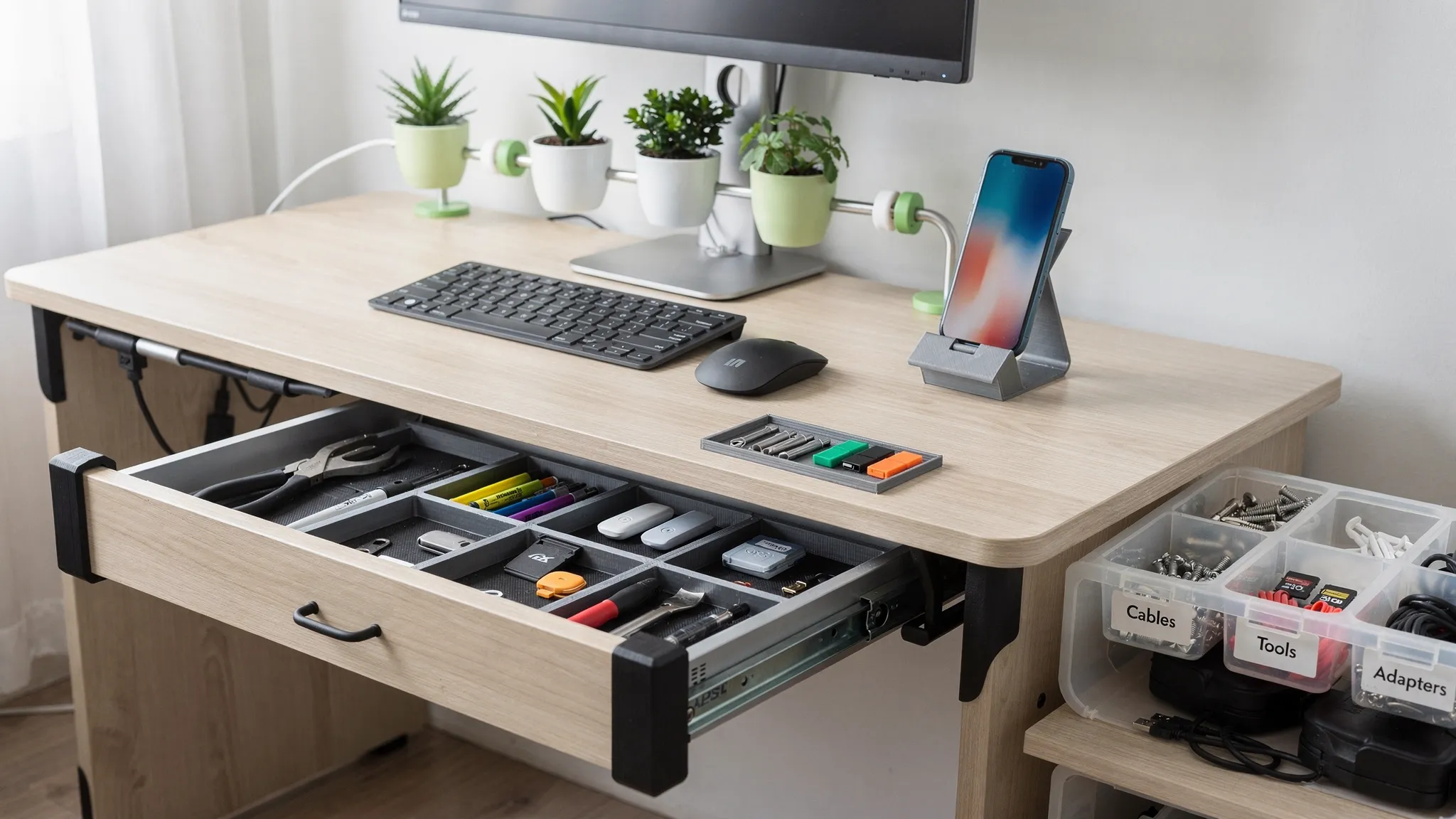
Store-bought organizers are designed for average drawers, average shelves, and average routines. Your home is not average. That is why drawer inserts, stackable trays, label holders, wall-mounted bins, and custom cable guides remain some of the most used 3D printed items.
A great organization print usually starts with a specific mess. For example, instead of printing a generic tray, design or choose a tray for the exact items you use: batteries, drill bits, tea bags, makeup, game pieces, SD cards, chargers, sewing tools, or craft supplies.
The best part is that you can make the organizer match the space instead of forcing the space to match the organizer. A narrow pantry shelf, shallow desk drawer, or awkward cabinet corner can become useful with a part made to fit.
Desk, gaming, and creator setup upgrades
Desk prints are popular because they are visible, useful, and easy to personalize. Cable combs, headphone stands, phone docks, keyboard risers, controller holders, webcam mounts, pen cups, and under-desk hooks can make a setup feel cleaner without expensive accessories.
For gamers and creators, 3D printing is especially useful for odd mounting problems. A microphone cable guide, small light bracket, camera accessory holder, stream deck stand, or controller wall mount can be made to match the exact layout of a desk.
The main design rule is stability. Tall stands need a wide base. Mounts need enough wall thickness. Anything that hangs under a desk should use proper hardware, not just adhesive, if it will hold weight.
Hobby, tabletop, and collectible projects
Hobby prints are not just decorative. They often improve the way people paint, store, display, and play. Miniature painters use brush holders, paint racks, wet palette accessories, model handles, and display plinths. Board gamers use token trays, card holders, box inserts, terrain, and custom markers.
Collectors often use stands, risers, wall mounts, helmet supports, figure bases, and protective display accessories. These projects are popular because they can be tailored to a specific collection. A stand for one controller, one prop, or one figure does not need to be universal. It just needs to fit perfectly.
For high-detail pieces, resin printing is often preferred because it can capture small features more cleanly than many filament prints. For larger display structures, filament printing can be more practical and durable.
Plant, garden, and outdoor-lite projects
Plant owners often find repeat uses for 3D prints because plant care involves small accessories that need to be sized to a pot, shelf, or growing setup. Popular ideas include plant labels, trellis clips, propagation tube stands, watering funnels, humidity tray risers, moss pole clips, and custom pot feet.
For outdoor or damp environments, material selection matters. PLA can work for indoor decorative use, but it may soften or degrade faster in heat, UV, or moisture-heavy spaces. PETG, ASA, or other weather-tolerant options are often better for functional outdoor use, depending on availability and the application.
Avoid using ordinary 3D prints for direct food contact unless the material, process, and finish are specifically chosen for that purpose. Layer lines can trap residue, and not all materials or colorants are appropriate for food-related use.
Small business prints people notice
For businesses, useful 3D prints are often small physical assets that support selling, explaining, or displaying something. Product risers, branded signage, trade show samples, prototype enclosures, packaging fit checks, counter displays, and custom nameplates can all be produced in small batches without committing to mass manufacturing.
This is especially valuable for challenger brands, makers, and local businesses that need to test an idea before investing in tooling or inventory. Physical presentation also works best when it matches the brand strategy behind it. If you are turning prototypes or displays into part of a launch, a partner like Boil’s branding and go-to-market team can help connect the physical product experience with a clearer market story.
For small business owners, the practical advantage is speed of learning. A 3D printed display, sample, or prototype can reveal what customers notice, touch, misunderstand, or ask about before you spend more on production.
A practical shortlist of ideas to print
If you want a starting point, choose a project from this list based on a real annoyance you have this week.
| Idea | Where it helps | Smart customization |
|---|---|---|
| Custom drawer divider | Kitchen, desk, workshop | Match the drawer width and item sizes |
| Cable pass-through grommet | Desk or media center | Fit the exact hole and cable bundle |
| Remote control dock | Living room or bedroom | Size for your remotes and mounting surface |
| Battery organizer | Utility drawer | Separate AA, AAA, coin cells, and rechargeables |
| Headphone stand | Desk or gaming setup | Add initials, color choice, or clamp geometry |
| Board game token tray | Game night | Fit the specific game box and table layout |
| Paint bottle rack | Hobby desk | Match your bottle brand and shelf space |
| Plant label set | Indoor garden | Add plant names, dates, or icons |
| Replacement knob | Cabinet, appliance, tool | Match shaft shape and grip style |
| Wall hook set | Entryway or closet | Choose screw spacing and load needs |
| Product display riser | Retail, craft fairs, photography | Match product size and brand colors |
| Prototype enclosure | Electronics or product design | Include ports, standoffs, and test clearances |
| Custom keychain or tag | Gifts, events, teams | Add names, numbers, or simple branding |
| Phone charging stand | Nightstand or desk | Fit the phone case and cable angle |
| Label clip | Pantry, bins, shelves | Match shelf thickness and label size |
The best first project is usually not the most impressive. It is the one you will touch every day.
Ready-made model or custom design?
Not every useful print needs to be designed from scratch. Ready-made models are great when the object is generic, decorative, or already designed by a trusted creator. Custom prints are better when fit, sizing, branding, or function matters.
| Choose a ready-made print when | Choose a custom print when |
|---|---|
| The size does not need to be exact | The part must fit an object you already own |
| You want a decorative or collectible item | You need a replacement part or prototype |
| The model is designer-authorized | You want names, logos, dimensions, or special features |
| The use is low-stress and simple | The material, strength, or finish affects performance |
If you already have a file, make sure the scale, units, material expectations, and finish requirements are clear before ordering. Firecloud Printz has a helpful guide on what to prepare when you want to 3D print from file, including file types, dimensions, and order notes.
If you do not have a model yet, start by describing the problem. A good print partner can often help you understand whether your idea is suited for 3D printing, whether an existing model might work, or whether a custom file is needed.
Material choices for projects people actually use
Material choice affects strength, flexibility, heat resistance, surface finish, and cost. Availability varies by print provider, so treat the table below as a practical starting point rather than a fixed menu.
| Goal | Common material fit | Notes |
|---|---|---|
| Decorative prints and organizers | PLA | Easy to print, clean-looking, best for indoor low-heat use |
| Functional home parts | PETG | Better toughness and moisture resistance than PLA in many uses |
| Flexible grips, bumpers, and feet | TPU | Useful when the part needs bend or impact absorption |
| High-detail miniatures and display pieces | Resin | Excellent detail, but material behavior varies by resin type |
| Outdoor or higher-heat use | ASA, ABS, nylon, or specialty materials | Requires the right process and design, ask before ordering |
| Prototypes and fit checks | PLA, PETG, resin, or nylon | Choose based on whether you are testing shape, strength, or detail |
For daily-use prints, do not choose material by color alone. Think about where the part will live. A car interior, sunny window, dishwasher area, garage, or outdoor shelf can expose a print to heat, UV, moisture, and stress.
How to make practical prints look better and last longer
Useful prints do not have to look rough. A few design and ordering choices can make a part feel more finished and reliable.
- Measure the real object, not the product listing dimensions.
- Add small fillets or rounded edges where parts might crack or feel sharp.
- Decide which face should look best, since orientation can affect visible layer lines.
- Use hardware for load-bearing mounts, such as screws, threaded inserts, magnets, or adhesive pads chosen for the surface.
- Prototype tight-fitting areas before printing a large or expensive part.
- Avoid thin decorative details if the object will be handled often.
- Respect licenses when printing designer models, especially for gifts, resale, or shop use.
If the project is a gift or customer-facing item, finish matters more. Sanding, primer, paint, color choice, and orientation can turn a simple print into something that looks intentional instead of improvised.
When to use Firecloud Printz for your project
Printing at home can be rewarding, but it also requires printer setup, calibration, material storage, troubleshooting, and post-processing. If you want the result without managing the machine, a service can save time and reduce failed attempts.
Firecloud Printz specializes in high-quality custom 3D printing, ready-made designer-authorized products, quick order estimates, high-detail prints, sustainable production, multiple material options, secure payments, and customer support. That makes it a practical choice when you have a useful idea but want help turning it into a clean physical object.
Use a professional print service when the project needs reliable detail, a better finish, multiple copies, material guidance, or a custom fit. For ready-made designs, Firecloud Printz also offers a curated shop of authorized prints, including Hive-authorized products.
Frequently Asked Questions
What are the most useful 3D print ideas for beginners? The best beginner projects are organizers, cable holders, simple stands, plant labels, board game trays, and low-stress replacement parts. They are practical, easy to check for fit, and usually do not require advanced materials.
Are 3D printed parts strong enough for daily use? Many are, if the design, material, orientation, and wall thickness match the job. A decorative figure and a functional bracket need different decisions. For load-bearing parts, discuss the use case before printing.
What should I avoid 3D printing? Avoid safety-critical parts, regulated items, high-heat components, food-contact items without proper material and finishing controls, and parts where failure could cause injury or major property damage.
Do I need a 3D model before ordering a print? It helps, but it is not always the starting point. If you have a file, send it with dimensions and use-case notes. If you only have an idea, describe the problem, measurements, and desired outcome so the project can be evaluated.
Is custom 3D printing better than buying a normal product? Custom 3D printing is better when exact fit, personalization, low quantity, or fast iteration matters. A normal product is usually better for mass-produced items that already fit your needs at a lower cost.
Bring a useful 3D print idea to life
The best 3D print projects are the ones you keep using: the organizer that finally fits, the missing part that saves an item, the gift that feels personal, or the prototype that helps a business move forward.
If you have a design file, a rough sketch, or just a practical problem you want to solve, Firecloud Printz can help turn it into a high-detail custom print. Visit Firecloud Printz to explore ready-made designer products or request an estimate for your next custom 3D printing project.
