
How to Sell Your 3D Prints Legally and Confidently
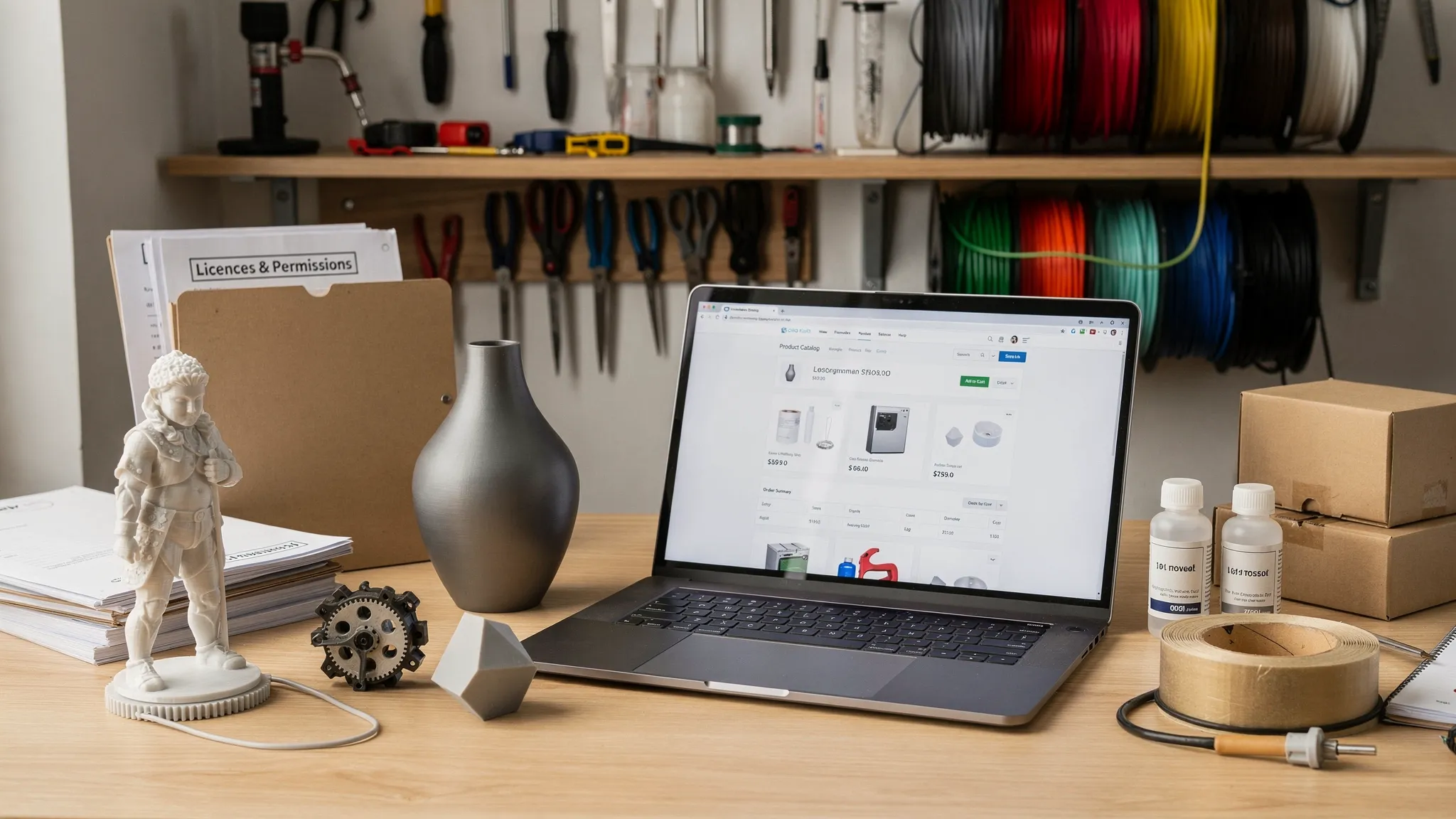
Selling 3D prints is one of the most accessible ways to turn design skill, printer time, or a creative hobby into revenue. But the business side is not as simple as downloading a model, pressing print, and posting it for sale. If you want to sell your 3D prints confidently, you need to understand permissions, intellectual property, product safety, and the records that prove you acted responsibly.
This guide is written for makers, small shops, artists, and side hustlers who want a practical, non-intimidating path. It is not legal advice, and laws vary by location, but it will help you ask the right questions before you list a product, accept a custom order, or scale a 3D print shop.
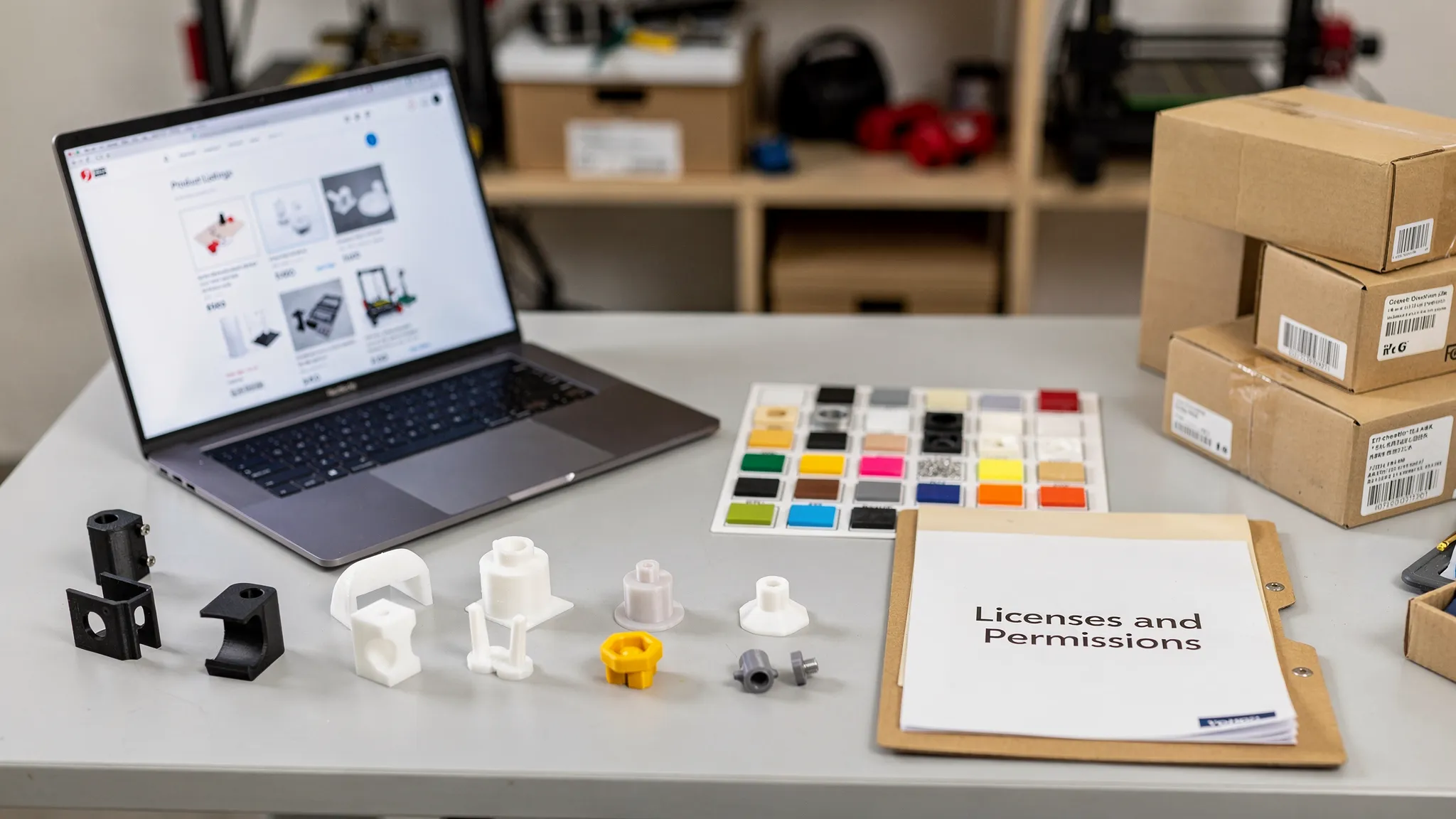
The basic rule: sell only what you have the right to sell
The safest starting point is simple: you can sell a 3D printed item when you created the design yourself, purchased or received commercial permission, or are using a model that clearly allows commercial use.
That permission matters because a 3D print can involve multiple rights at once. The digital file may be protected, the character or logo on the object may be protected, and a functional mechanism may even involve patent rights. A seller who ignores those layers can face takedown notices, marketplace bans, refund demands, or legal claims.
| Design source | Can you sell the physical print? | What to verify first |
|---|---|---|
| Your original model | Usually yes | Confirm it is not copied from protected art, brands, products, or patented mechanisms. |
| Downloaded model | Only if the license allows it | Look for explicit commercial print rights, not just permission to download or print for yourself. |
| Customer-provided file | Only with proper authorization | Get confirmation that the customer owns or has permission to manufacture the design. |
| Public domain model | Usually yes | Confirm it is truly public domain and not a reupload of someone else’s protected work. |
| Creative Commons model | Depends on the license | Avoid non-commercial licenses for sales and follow attribution or ShareAlike requirements if applicable. |
| Fan art or branded design | High risk | Trademark, copyright, and marketplace rules may still apply even if you modeled it yourself. |
If you are unsure, do not guess. Ask the designer, choose a clearly licensed model, or consult an attorney before making commercial sales.
Understand the IP issues behind 3D printed products
You do not need to become an intellectual property attorney to run a responsible 3D printing business, but you do need to understand the basics.
Copyright
Copyright generally protects original creative expression. In 3D printing, that can include sculptural models, miniatures, decorative objects, character-like designs, and the digital model file itself. The U.S. Copyright Office explains copyright as protection for original works of authorship fixed in a tangible medium.
For sellers, the key point is that buying, downloading, or accessing a file does not automatically give you the right to sell prints from it. A file can be free to download and still be restricted to personal use.
Functional objects can be more complicated. A plain bracket, jig, or repair part may have fewer copyright issues than a sculpted figure, but decorative features, logos, product shapes, and copied design elements can still create risk.
Trademark
Trademark protects brand identifiers such as names, logos, slogans, and product branding. This is why selling prints with sports team logos, game logos, company marks, or famous character names can be risky.
Trademark issues can also appear in your listing text. Even if your item is physically generic, using another company’s brand name in a way that suggests affiliation or endorsement can cause problems. Be especially careful with phrases like official, licensed, compatible with, replacement for, or inspired by. Some uses may be allowed in limited contexts, but they need to be accurate and non-misleading.
Patents and design patents
Patents can protect inventions, mechanisms, and certain ornamental designs. A print that looks simple may still copy a protected product feature. The USPTO’s intellectual property resources are a useful starting point for understanding how patents, trademarks, and copyrights differ.
Patent risk is especially relevant for functional products, tools, accessories, replacement parts, and inventions based on someone else’s commercial product. If you are planning to sell a functional item at scale, it is worth doing deeper research before launch.
Read 3D model licenses like a seller
A common mistake is assuming that free means commercially usable. It often does not. Before you sell your 3D prints from a downloaded model, read the license carefully and save a copy for your records.
Look for these license details:
- Commercial use: The license should clearly allow commercial sale of physical prints. Personal use and non-commercial use are not enough.
- Physical prints versus digital files: Many designers allow sellers to sell finished prints but prohibit reselling, sharing, or remixing the STL, 3MF, OBJ, or source file.
- Attribution: Some licenses require you to credit the designer in the product listing, packaging, or documentation.
- Derivative works: If you modify, remix, resize, or combine models, confirm that derivatives are allowed and whether the new version must use the same license.
- Sales channels: Some creators limit where prints may be sold, such as a personal website only, local events only, or no large marketplaces.
- Unit limits: A license may allow a small number of sales but require a higher-tier license for production quantities.
- Subscription terms: If a commercial license comes through a subscription or membership, check whether rights continue after cancellation.
Creative Commons licenses are common in the 3D model world, but they are not all the same. For example, CC BY may allow commercial use with attribution, while CC BY-NC does not allow commercial use. The Creative Commons license guide is a helpful reference when comparing terms.
Firecloud Printz has a dedicated guide on finding legitimate models and understanding permissions if you want a deeper walkthrough: 3D Print Designers: How to Find Legit, Licensed Models.
A practical workflow before you list a 3D print for sale
A legal workflow does not need to be complicated. The goal is to create a repeatable habit that protects you before money changes hands.
Classify the design source
Start by labeling every product idea as original, licensed, customer-provided, public domain, or questionable. If it is questionable, pause. Most legal problems begin when sellers rush to list a popular design without verifying where it came from.
For original designs, keep your working files, sketches, CAD history, test prints, and dated project notes. These records help show that you created the model and did not simply copy another seller.
Confirm commercial permission
If the model came from a designer, marketplace, subscription, or community site, find the exact license. Do not rely on comments, screenshots from other sellers, or assumptions based on what competitors are doing.
If the license is unclear, ask the designer in writing. A short permission email is better than a vague marketplace description. Save the response with the model file and order records.
Save proof before selling
Keep a simple folder for each product. Include the model source, license text, purchase receipt, designer messages, date accessed, screenshots of relevant terms, and any attribution wording required by the creator.
Licenses can change over time. If you only rely on a live webpage, you may not be able to prove what terms applied when you began selling.
Test the print and document the final product
Legal confidence also includes quality confidence. Print the model, inspect it, photograph your actual finished product, and document material, color, settings, and post-processing steps. If you plan to sell multiple units, create a consistent production note so customers receive what your listing promises.
For file preparation and printability checks, this Firecloud Printz guide may help: 3D Print From File: What You Need Before You Order.
Be careful with fan art, game pieces, and pop culture prints
Fan art is one of the most tempting categories for 3D print sellers because demand is obvious. It is also one of the riskiest.
A common misconception is that a self-modeled file is automatically safe. If your model is based on a famous character, movie prop, game asset, brand mascot, vehicle design, helmet, logo, or recognizable product, the rights holder may still object. Marketplaces may remove the listing even before a formal legal dispute begins.
Terms like fan-made, inspired by, unofficial, or parody do not automatically make a product legal. They may help clarify that you are not affiliated with a brand, but they do not grant permission. If the product depends on someone else’s protected character or brand recognition to sell, treat it as high risk.
Safer alternatives include original fantasy designs, generic genre-inspired items, fully licensed creator models, and officially authorized product lines.
Product safety is part of selling legally
Even when the model license is clean, the finished print still needs to be appropriate for its intended use. Sellers can create risk by offering products that are unsafe, overpromised, or used in regulated contexts.
| Product type | Why it needs extra care | Safer approach |
|---|---|---|
| Children’s items | Small parts, sharp edges, material safety, and choking hazards may apply. | Avoid claims that an item is child-safe unless you understand applicable testing and labeling requirements. |
| Food-contact items | Layer lines, coatings, pigments, and porosity can affect cleanability and safety. | Use appropriate materials and avoid food-safe claims unless the full process supports them. |
| Load-bearing parts | Printed parts can fail along layer lines or under heat, impact, or repeated stress. | State limitations clearly and avoid critical safety applications without engineering validation. |
| Automotive or electrical parts | Heat, vibration, flammability, and liability risks can be significant. | Sell only for appropriate uses and avoid unsupported performance claims. |
| Medical or body-contact items | Regulatory and material requirements may apply. | Do not market items for medical use without professional compliance review. |
| Weapon-related parts | Laws and marketplace policies can be strict. | Avoid restricted items and understand federal, state, local, and platform rules. |
In the United States, consumer products may be subject to rules from agencies such as the Consumer Product Safety Commission. If you sell children’s products, wearables, electrical enclosures, medical-adjacent items, or anything with safety implications, do more research before listing.
Write honest listings that reduce risk
A strong product listing does more than attract buyers. It sets expectations, avoids misleading claims, and documents what you are actually selling.
Good listings should include:
- Your own product photos: Use photos of your actual print, not stolen renders or another seller’s images.
- Material disclosure: Tell buyers whether the item is PLA, PETG, resin, TPU, or another material.
- Size and tolerance details: Include dimensions and note that minor variation can occur with 3D printed parts.
- Use limitations: State whether the item is decorative, cosplay-only, prototype-only, indoor-only, or not intended for children.
- Designer credit: Include attribution if required by the license.
- No false affiliation: Do not imply endorsement, official licensing, or brand connection unless it is true.
Honesty can also improve customer satisfaction. Buyers who understand layer lines, support marks, post-processing variation, and material limits are less likely to complain or misuse the item.
Price your prints with licensing and compliance in mind
Many new sellers price prints by material cost alone. That usually leads to undercharging and rushed decisions. A sustainable price should account for the full cost of producing and selling legally.
| Cost category | What to include |
|---|---|
| License or designer fee | Commercial model purchases, subscriptions, royalty payments, or seller memberships. |
| Material and waste | Filament, resin, failed prints, supports, test pieces, and color changes. |
| Machine time | Printer wear, electricity, maintenance, calibration, and queue time. |
| Labor | File prep, slicing, printing supervision, cleanup, sanding, painting, packing, and customer service. |
| Marketplace costs | Listing fees, transaction fees, payment processing, ads, and returns. |
| Packaging and shipping | Boxes, inserts, labels, postage, replacement shipments, and insurance when needed. |
| Business overhead | Software, storage, tax support, insurance, bookkeeping, and compliance research. |
If a commercial license costs more than a personal-use file, that is not a drawback. It is the cost of selling with permission. Build it into your margin from the beginning.
Protect your own designs as you grow
If you create original models, you should also think about protecting your work. At minimum, keep clear records showing when you created each design. Use consistent brand names, keep your source files organized, and consider publishing terms that explain what buyers can and cannot do with your prints or files.
If you sell digital files as well as physical prints, your terms should be especially clear. Many designers allow customers to print for personal use but prohibit reselling files, uploading them elsewhere, or selling physical prints from the file. If you want enforceable protection, speak with an attorney about copyright registration, trademarks, contracts, or patent strategy where appropriate.
For functional inventions, be careful about public disclosure. Posting a product online before speaking with a patent professional may affect your options in some jurisdictions.
Know when to use contracts for custom work
Custom 3D printing can create ownership confusion. A customer might bring the idea, you might create the CAD file, and both sides may assume different things about who owns the final design.
Before starting paid custom work, clarify these points in writing:
- Who owns the finished model file: Decide whether the customer receives only the physical print or also the editable design file.
- Who can resell the item: State whether you can reuse, display, or sell the design to others.
- Who is responsible for permissions: If the customer provides references, logos, or files, they should confirm they have the right to use them.
- How revisions are handled: Define what is included and what counts as extra design work.
- What the print is intended to do: Document whether the part is decorative, prototype, functional, or production-ready.
This is especially important for business customers, replacement parts, branded promotional items, and product prototypes.
Scale carefully, not casually
A small print side hustle can often run from a workbench and a spreadsheet. A growing business needs better systems: SKU records, license folders, quality checks, customer support templates, tax processes, supplier tracking, and documented production standards.
If your 3D print business expands into a larger operation with sales, marketing, client services, or leadership needs, it may also be time to think professionally about hiring. For companies building out commercial teams, a specialist international recruitment agency can be useful when growth requires experienced talent rather than ad hoc help.
Scaling does not remove legal responsibility. It increases the need for consistent documentation. The more units you sell, the more important it becomes to know exactly which license, material, process, and listing language applies to each product.
Where Firecloud Printz fits in
If you want to sell prints but do not want to manage every production variable yourself, a quality-focused print partner can help you turn clean, authorized files into finished products. Firecloud Printz offers custom 3D printing, multiple material options, high-detail prints, quick order estimates, secure online ordering, and a curated shop of designer-authorized prints.
That last point matters. Selling legally is not just about what looks good on the printer bed. It is about respecting designers, customers, and the rules that make creative businesses sustainable.
If you are preparing a product line, prototype, gift, or small-batch run, you can also review how to spot high quality 3D printing before you order so your final prints match your expectations.
Frequently Asked Questions
Can I sell 3D prints from a free model website? Only if the model license allows commercial sale of physical prints. Many free models are personal-use or non-commercial only, so check the exact license before listing anything.
Can I sell a print if I designed the model myself? Usually, yes, if the design is truly original and does not copy protected characters, logos, products, patented features, or another creator’s work. Original design records are helpful if questions arise.
Is fan art legal to sell if I do not use the brand name? Not necessarily. Removing the brand name may reduce trademark risk in the listing, but the object itself can still infringe copyright, trademark, or design rights if it is based on protected material.
Can I sell prints from a Patreon, subscription, or commercial license? Possibly. Read the license terms closely. Some subscriptions allow physical print sales only while your membership is active, limit sales volume, require attribution, or restrict certain marketplaces.
Do I need a business license to sell 3D prints? It depends on your location, sales channel, and business structure. You may need local business registration, sales tax setup, insurance, or other compliance steps. Check local requirements or speak with a qualified professional.
Can I hire a print service to manufacture items I plan to sell? Yes, as long as you have the right to produce and sell the design. When using a print service, provide the file, specifications, and license documentation if the model comes from a third-party designer.
How do I prove I had permission to sell a print? Keep a product folder with the license, purchase receipt, designer messages, screenshots of terms, date accessed, attribution requirements, and any commercial seller agreement. Good records are your first line of defense.
Bring your 3D print ideas to market the right way
Selling 3D prints legally comes down to a repeatable standard: verify the rights, document the permission, make honest claims, choose safe applications, and produce consistent quality.
If you have a licensed model, an original design, or a custom project you want made with care, Firecloud Printz can help bring it to life with custom 3D printing, ready-made designer-authorized products, material options, and customer support from estimate to finished print.
