
How to Pick the Right 3D Print Store for Custom Orders
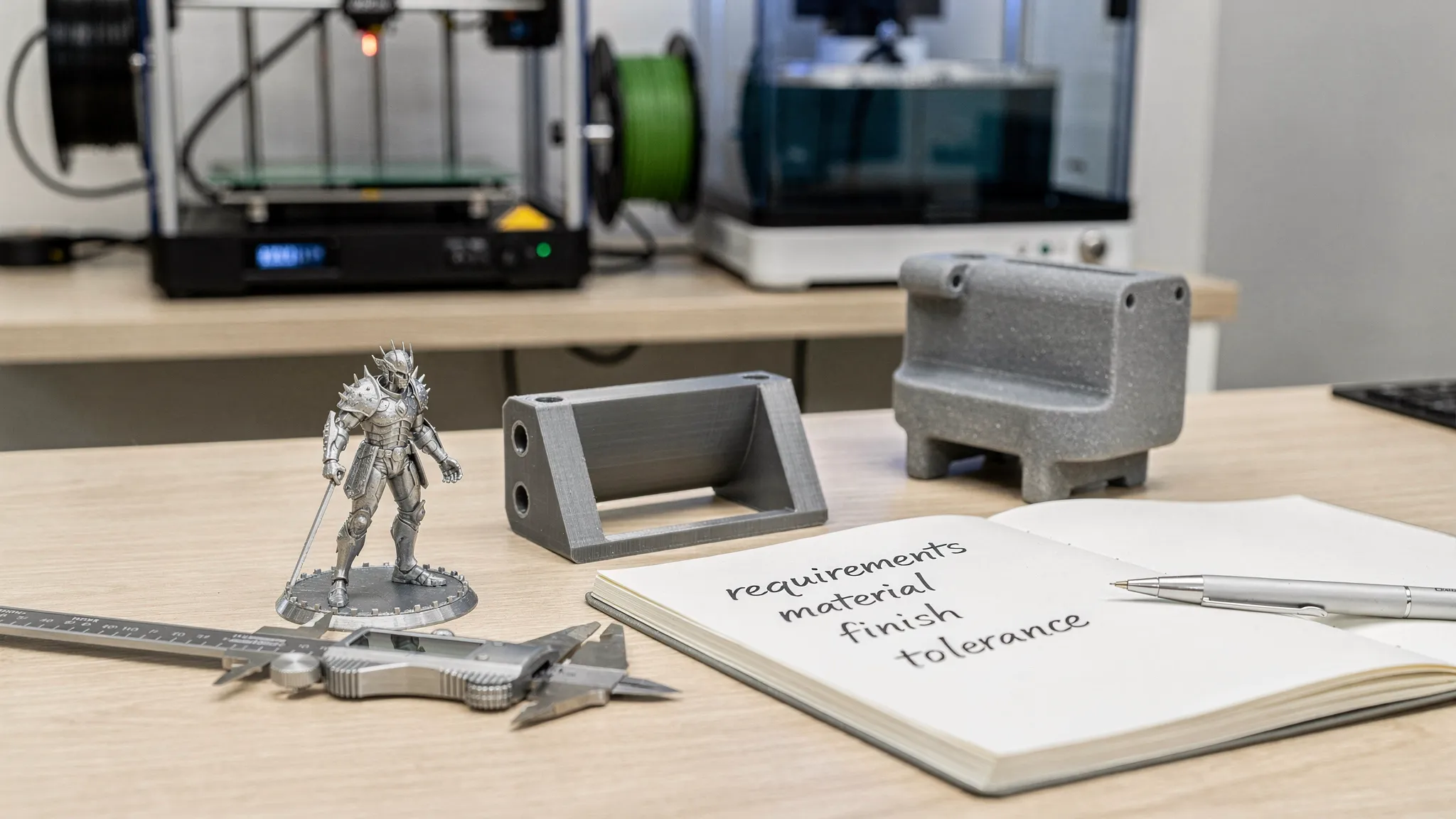
Ordering a custom print is exciting, until you realize how much the outcome depends on the 3D print store you choose. Two shops can receive the same STL and deliver parts that look and perform completely differently because of process selection, machine tuning, material handling, support strategy, post-processing, and quality control.
This guide shows you how to pick the right 3D print store for custom orders, what questions to ask, and what red flags to avoid, so you can get predictable results on the first attempt (or at least avoid paying for avoidable surprises).
Step 1: Define what “success” means for your part
A good print partner starts by understanding your requirements, not by throwing a generic price at your file.
Before you compare stores, write down a simple spec for your order:
- Use case: display piece, cosplay prop, tabletop mini, prototype, jig/fixture, end-use part.
- Priority: strength, surface finish, fine detail, heat resistance, UV resistance, flexibility, low cost.
- Fit requirements: “must snap onto X,” “bolt holes must align,” “needs smooth sliding.”
- Tolerance sensitivity: are you okay sanding/drilling, or does it need to work out of the box?
- Quantity: one-off, small batch, or repeat orders.
- Deadline: event date, customer delivery, product launch.
If you want a quick refresher on the end-to-end printing workflow (including what the shop is doing behind the scenes), Firecloud Printz has a plain-English walkthrough here: 3D Printing Process Step by Step (Without the Jargon).
Step 2: Confirm the store can produce your type of part
“3D printing” is not one thing. Different technologies are better for different outcomes.
Match the process to the goal
When comparing a 3D print store, ask what processes they offer and how they decide between them.
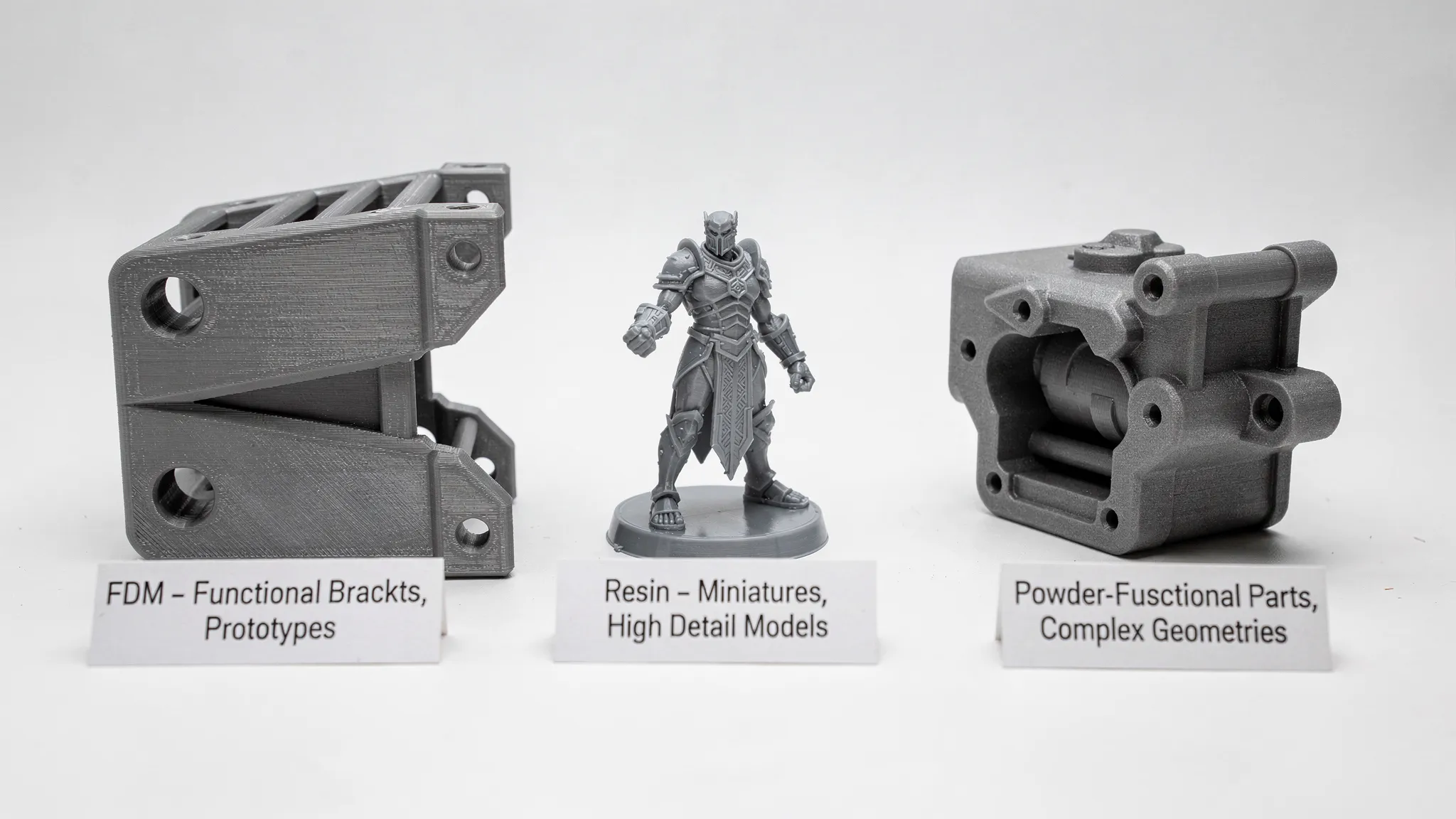
- FDM (filament) is often great for larger parts, functional prototypes, and cost-effective prints. Surface finish typically shows layer lines.
- Resin (SLA/MSLA) is often preferred for high-detail parts like minis, detailed figurines, or masters for molding. Post-processing (washing/curing) matters a lot.
- Powder-based (SLS/MJF) (if offered) can be strong and consistent for functional parts and small production runs, usually at a higher cost and with different surface texture.
A reliable store will recommend a process based on your requirements, not just what is easiest for them.
Step 3: Evaluate the quote and how they communicate
The quote is where you can spot most quality issues before they happen.
What a good quote experience looks like
A strong 3D print store typically does some form of preflight and asks clarifying questions such as:
- What is the part used for?
- Which surfaces must look perfect?
- Do holes need to be tapped, drilled, or press-fit?
- Are there mating parts, magnets, hardware, or inserts?
- Do you need the part painted, smoothed, or otherwise finished?
They should also be able to explain (in plain language):
- Material options that match the job
- Expected lead time and what affects it
- Post-processing steps included (support removal, sanding, curing, etc.)
- Known risks (warping, thin walls, fragile features)
Red flags during quoting
Be cautious if a store:
- Won’t tell you what material they plan to use or why
- Gives a price without checking orientation, supports, or scale
- Avoids discussing tolerances and fit at all
- Can’t explain what finishing is included
- Pushes you to order without confirming requirements
Step 4: Use this checklist to compare a 3D print store
The easiest way to choose is to compare stores across the factors that predict outcomes.
| What to evaluate | What “good” looks like | Questions to ask before you pay |
|---|---|---|
| Process fit | They recommend FDM vs resin (or other) based on your goal | “Which process would you use for this and why?” |
| Material selection | Multiple material options, with clear trade-offs | “What material is best for strength/heat/UV/detail?” |
| Printability review | They flag thin walls, unsupported overhangs, fragile details | “Will you check the file for printability issues?” |
| Surface finish plan | They describe where supports will go and how surfaces will look | “Which face will be the ‘show’ face, and how do you protect it?” |
| Dimensional expectations | They set realistic expectations for fit and iteration | “If this is a press-fit, what clearance should I design for?” |
| Post-processing | Clear list of included steps and add-ons | “Is sanding, curing, or smoothing included?” |
| Quality control | They check parts before shipping and can reprint if needed | “What is your QC process before you ship?” |
| Photo proof | They can provide print photos for approval when appropriate | “Can you share photos before shipping for custom jobs?” |
| Turnaround reliability | Lead times are stated clearly and backed by process | “What’s the typical turnaround, and what could delay it?” |
| Payment and support | Secure checkout and responsive customer support | “If something arrives damaged, what’s your resolution process?” |
| Licensing and ethics | They respect creator rights and sell authorized designs | “Are your designer products authorized?” |
| Sustainability | Reasonable waste practices and responsible production choices | “Do you do anything to reduce material waste or failed prints?” |
Step 5: Look for quality signals that are hard to fake
Marketing photos are nice, but you want proof of consistency.
Better signals than “5-star reviews”
Reviews help, but also look for:
- Close-up photos of real prints (support marks, layer lines, resin detail)
- Repeatability (do their products look consistent across listings?)
- Clear material naming (not just “plastic”)
- Evidence of functional work (jigs, enclosures, brackets, not only decorative models)
If you plan to sell what you’re printing, ask if they can support repeat orders and keep output consistent. Consistency matters more than a single perfect prototype.
Step 6: Confirm how they handle your files (and your rights)
When you upload a custom design, you’re sharing intellectual property. Even for hobby prints, you still want basic professionalism.
Ask the store:
- Who owns the files and the output (it should remain your design unless otherwise agreed)
- Whether they retain your files, and for how long
- Whether they will print your model for others (they should not)
- Whether they respect licenses for downloaded models
Also consider your own workflow. If your organization needs structured handling of digital assets (access control, secure storage, project documentation), it can help to align with a professional IT partner. For business-grade IT and AI consulting around secure systems and implementation, you can explore IT and AI solutions from Syneo.
Step 7: Don’t overlook logistics: packaging, shipping, and support
A great print can still arrive broken, warped from heat exposure, or cosmetically damaged if packaging is an afterthought.
Before ordering, verify:
- Shipping options and tracking
- Packaging approach for fragile resin detail or thin features
- Support responsiveness (how fast they reply to questions)
- Resolution path if a part arrives damaged or incorrect
For custom orders, clear communication and problem-solving are often the difference between a smooth project and a frustrating one.
Step 8: Choose between “shop items” and fully custom orders
Many people assume “custom” is always best. Not necessarily.
When a ready-made item is the smarter option
A curated shop product is often ideal when:
- You want a proven design with known print settings
- You care more about fast turnaround than unique geometry
- You want a designer-approved model without licensing uncertainty
When you should go fully custom
Custom is best when:
- You need a part to fit your exact measurements
- You’re prototyping a product
- You need unique branding, text, or geometry
- You’re iterating and want feedback on printability
What to expect from Firecloud Printz as a 3D print store
Firecloud Printz focuses on high-quality custom 3D printing and a curated shop of designer-authorized prints, with an emphasis on detail, efficiency, and a smooth ordering experience.
Based on their published offering, you can expect:
- Custom 3D printing for your own files
- A shop with designer-authorized products (including their status as an Authorized Hive seller)
- Quick order estimates to help you plan
- Multiple material options (to match strength, finish, and use-case needs)
- A focus on high-detail prints
- Sustainable production principles
- Secure payments and customer support through their online storefront
If you want to sanity-check your model before ordering (especially for wall thickness, supports, and tolerances), this companion guide can help you avoid common file issues: How To Choose a 3D Model for 3D Printer Success.
Frequently Asked Questions
How do I know if a 3D print store can handle tight tolerances? Look for a store that asks about fit requirements, discusses clearances, and sets expectations about iteration. A good sign is when they proactively ask what the part mates with.
Should I choose resin or FDM for my custom order? Choose resin when fine detail and smooth surfaces matter most (minis, figurines, display pieces). Choose FDM when size, toughness, and cost efficiency matter more (prototypes, brackets, larger parts).
What information should I include with my custom 3D print request? Include intended use, target material (if known), quantity, deadline, required dimensions or fit notes, and what surfaces must look best. If assembly is involved, mention hardware, inserts, magnets, or mating parts.
Is it safe to send my CAD/STL files to a print store? It can be, but you should choose a reputable store and ask how they handle file retention and reuse. For business projects, consider internal controls (access, storage, permissions) for your design files.
What’s the difference between a “3D print store” and a local maker with a printer? A dedicated 3D print store typically offers a more consistent process (materials, calibration, finishing, QC), clearer timelines, and structured customer support. That usually means fewer surprises for important parts.
Bring your custom design to life
If you’re ready to place a custom order, a good next step is to request an estimate with your file and a short note about your use case (function vs display, finish expectations, and deadline). You can also browse ready-made, designer-authorized items in the shop.
Explore options at Firecloud Printz and choose the path that fits your project, custom printing, or a proven shop design.
