
Custom 3D Printing Made Simple for Any Project
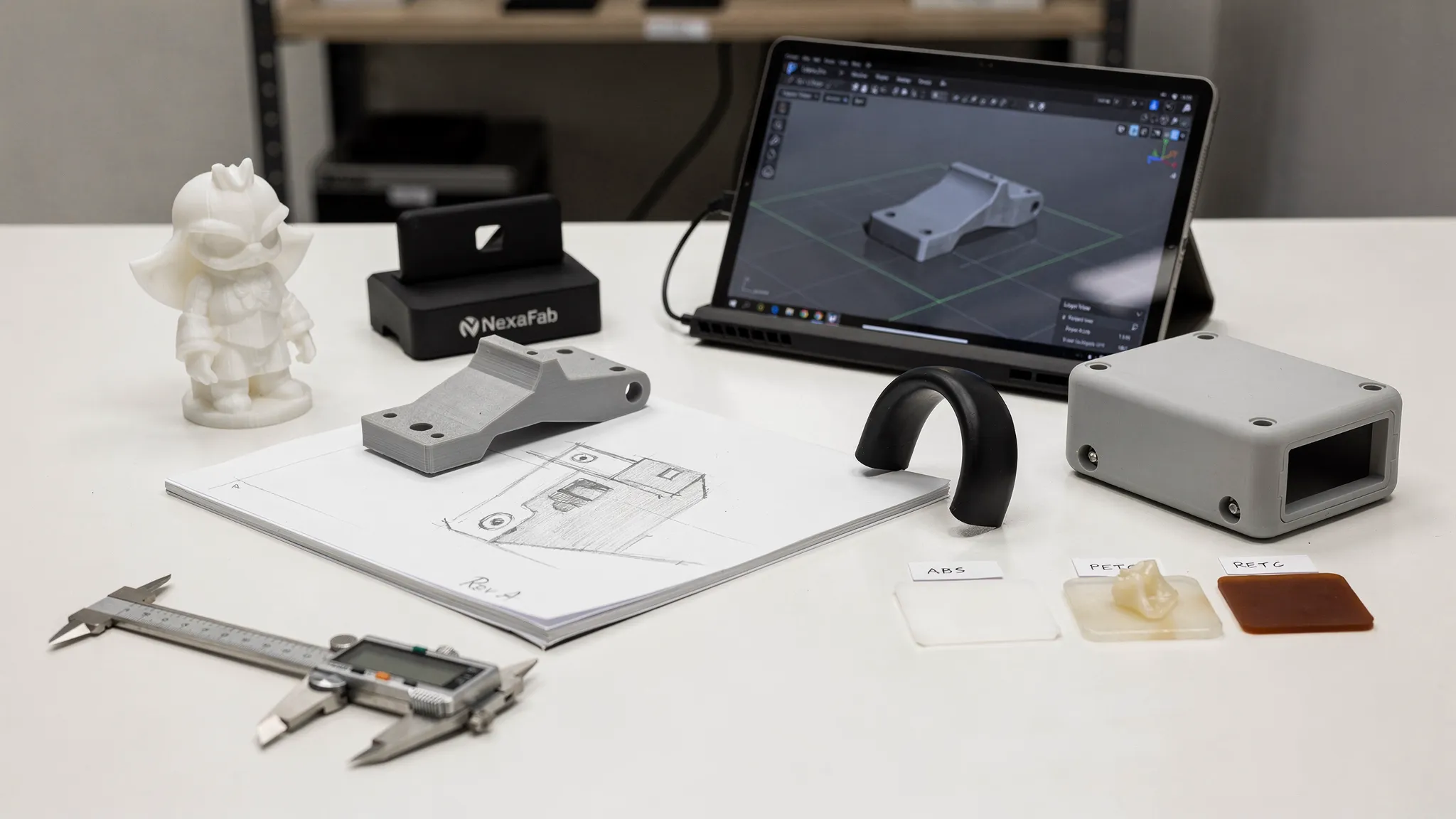
Custom 3D printing is often treated like something that belongs in an engineering lab, but most successful projects start with a simple need. A clip broke. A prototype needs to fit in someone’s hand. A display stand needs to match a brand. A gift should feel personal instead of generic.
The technology can be advanced, but ordering a custom print does not have to be complicated. When you focus on what the part needs to do, how it will be used, and what finish you expect, the rest of the process becomes much easier to manage.
This guide breaks custom 3D printing into plain-English decisions so you can move from idea to finished object with less guesswork, whether you are ordering a one-off part, a small batch, a decorative piece, or a prototype.
What custom 3D printing means in plain English
Custom 3D printing turns a digital model into a physical object by building it layer by layer. Instead of choosing a mass-produced item from a shelf, you can create something shaped around your dimensions, use case, style, or brand.
That customization can be practical or creative. It may be a replacement bracket that fits a specific appliance, a miniature with fine detail, a prototype enclosure for a new product idea, a custom organizer for a workspace, or a branded display for a small business.
The key advantage is flexibility. Traditional manufacturing often needs tooling, molds, or large order quantities to make economic sense. 3D printing is often better suited for prototypes, low-volume parts, personalized pieces, and designs that may change after testing.
Start with the job the part must do
The easiest way to simplify a custom project is to define the job before worrying about materials or printer settings. A print provider can make better recommendations when they understand the purpose of the object, not just its shape.
Before requesting an estimate, answer these questions:
- What problem should the part solve?
- Will it be decorative, functional, flexible, load-bearing, or used outdoors?
- Does it need to fit with another object?
- Are there important dimensions, holes, clips, threads, or clearances?
- What matters most: strength, surface detail, color, speed, or cost?
This small amount of planning prevents many common problems. For example, a display model may benefit from fine detail and a smooth finish, while a replacement part may need thicker walls, stronger orientation, and a material that handles wear better.
Match your project to the right path
Not every project needs the same level of design, testing, or finish. Use this quick map to decide what kind of information will help most.
| Project type | Main goal | What to provide | Useful note |
|---|---|---|---|
| Replacement part | Fit and function | Photos, measurements, broken part, use environment | Small tolerance changes can decide whether it fits |
| Prototype | Test shape, size, or function | CAD file, sketch, target dimensions, what you are testing | Expect revisions before the final version |
| Decorative piece | Detail and appearance | Model file, desired size, color, finish preferences | Fine details may need a different process than large simple forms |
| Business display or branded prop | Presentation and durability | Logo file, dimensions, location of use, quantity | A simple design can often feel premium with the right finish |
| Hobby or gaming accessory | Detail, scale, and compatibility | STL or 3MF file, scale, assembly notes, license status | Licensing matters if the model comes from a designer |
| Small batch production | Repeatability | Final file, quantity, inspection needs, packaging expectations | Prototype one part before approving a batch |
Presentation-focused projects are not limited to product companies. A client-facing business such as Kingdom Cute Hair Salon depends on visual details, from retail displays to appointment areas, and the same principle applies to custom printed signage, holders, stands, and branded accessories.
If you do not have a 3D file yet
You do not always need a finished CAD model to start the conversation. A print-ready file speeds things up, but many projects begin with a sketch, a broken part, reference photos, or a rough concept.
The more specific you can be, the easier it is to estimate the work and avoid revisions.
| Starting point | Helpful information to provide | Why it matters |
|---|---|---|
| Finished 3D file | STL, 3MF, STEP, or OBJ plus units and size | Confirms whether the model can be printed as intended |
| Rough sketch | Dimensions, purpose, photos, and notes | Helps convert the idea into a printable shape |
| Broken part | Photos from multiple angles and key measurements | Allows the replacement to be designed around real fit requirements |
| Online model | File link, license details, desired size | Helps confirm printability and legal use |
| Business idea | Logo, brand colors, quantity, use case | Guides size, material, and finishing choices |
If you already have a file, Firecloud Printz has a deeper checklist on what to prepare before you order a 3D print from a file.
The simple workflow from idea to finished object
A custom print feels much easier when you know what happens next. While every project is different, most orders follow a similar path.
- Describe the project clearly: Share what the object is, how it will be used, and what success looks like.
- Send files or references: Upload a 3D model if you have one, or provide sketches, photos, and measurements if you do not.
- Review printability: The model is checked for issues such as thin walls, unsupported details, incorrect scale, or features that may not print cleanly.
- Choose material and finish: The best option depends on strength, detail, flexibility, heat exposure, outdoor use, and appearance.
- Approve the estimate: Cost and turnaround are influenced by size, print time, material, support structures, post-processing, and quantity.
- Print and finish the part: The object is produced, cleaned up, and finished based on the agreed expectations.
- Inspect and iterate if needed: For prototypes or tight-fit parts, a second version may be the smartest way to get the best result.
Choose materials by outcome, not by hype
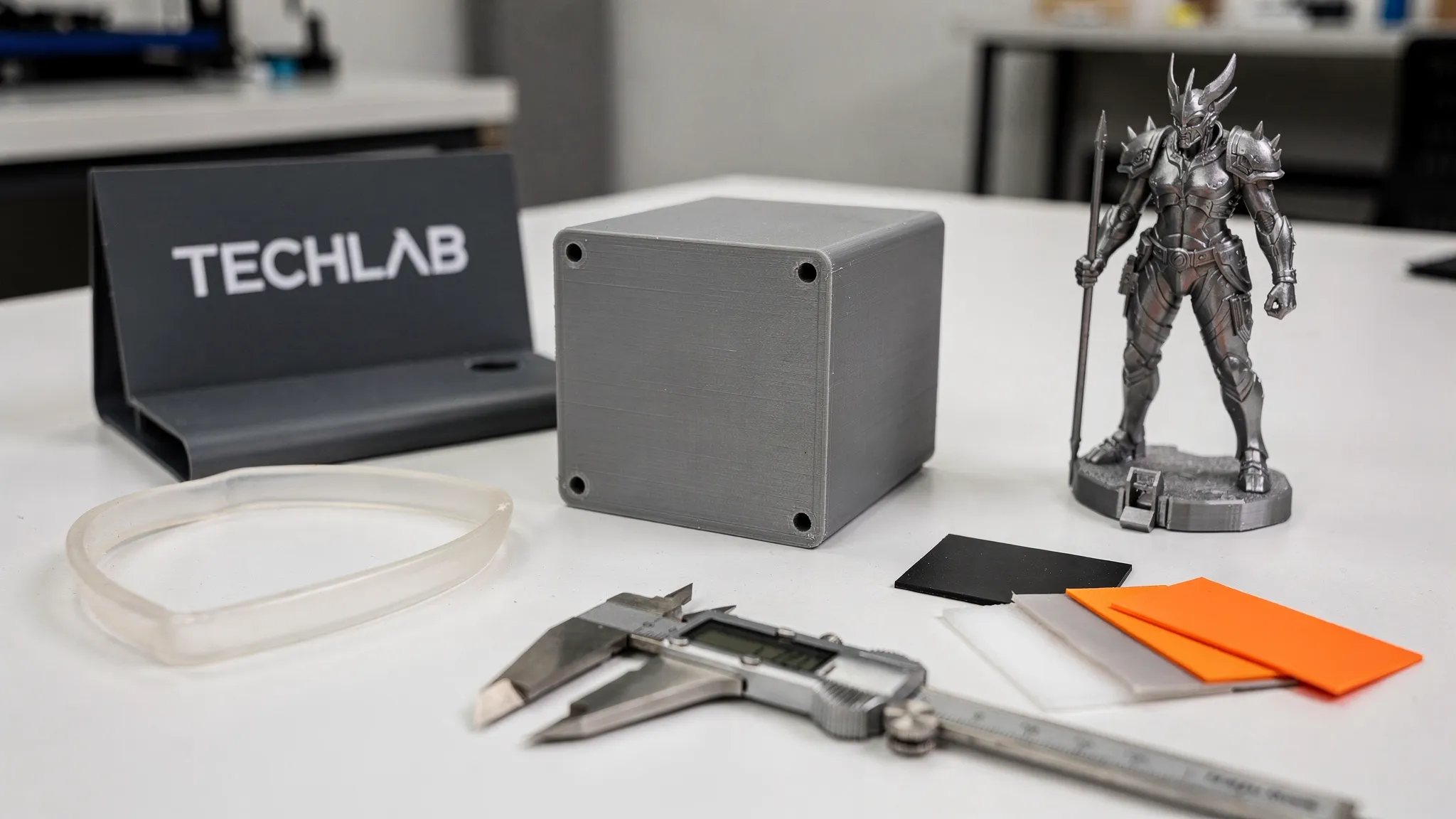
Material selection is one of the most confusing parts of custom 3D printing because there are many plastics, resins, composites, and process-specific options. The simplest approach is to choose based on what the object needs to survive.
Availability depends on the provider and project, but these common material families show how the decision usually works.
| Material family | Good fit | Watch for |
|---|---|---|
| PLA | Concept models, decor, desk items, simple prototypes | Not ideal for high heat or demanding mechanical use |
| PETG | Practical parts, organizers, clips, light-duty functional items | Can be tougher than PLA, but design still matters |
| TPU | Flexible bumpers, feet, grips, protective parts | Flexibility affects print speed, detail, and geometry |
| Resin | Miniatures, detailed models, smooth decorative pieces | Some resins can be brittle, and post-curing is part of the process |
| ABS or ASA | Outdoor parts or higher-temperature uses | Needs controlled printing conditions and proper design choices |
| Nylon or powder-based options | Durable components, complex shapes, small production runs | Cost and finish vary by process and provider |
For many customers, the best material is not the most expensive one. It is the one that matches the job. A decorative figure does not need the same material as a hinge. A prototype that will be tested once may not need the same durability as a part used every day.
How to keep cost and turnaround under control
Custom does not have to mean unpredictable. The biggest cost drivers are usually part size, material, print time, detail level, supports, post-processing, and the number of revisions required.
You can make the process smoother by doing a few things early:
- Confirm the final size and units before submitting a file.
- Tell the print provider which surfaces must look clean and which surfaces are less important.
- Start with one prototype before ordering several copies of a functional part.
- Avoid unnecessary solid sections when strength can be achieved with smarter design.
- Be realistic about tiny text, thin pins, snap fits, and moving assemblies.
- Share the deadline before the estimate, not after production starts.
Sustainability can also be part of the decision. Because parts are made on demand, custom printing can reduce unnecessary inventory and make it easier to produce only what is needed. Good design also helps reduce failed prints, wasted material, and avoidable reprints.
Quality expectations: strong, smooth, detailed, or fast
A good print is not always the smoothest print. It is the print that meets the project’s purpose.
If the part is functional, strength and fit usually matter more than a flawless surface. Layer direction, wall thickness, infill, fillets, ribs, and hardware inserts can all affect performance. If the object is decorative, surface finish, detail, color, and cleanup may matter more than mechanical strength.
For tight-fit assemblies, communicate which dimensions are critical. A decorative statue can be scaled visually, but a cap, clip, bracket, or enclosure may need clearances that account for the printing process. If another object needs to slide, snap, screw, or press into the printed part, say so before printing.
This is where a professional print service can save time. Instead of guessing through failed attempts, you can get guidance on material choice, orientation, supports, and whether a design should be split into multiple pieces.
Custom versus ready-made: which should you choose?
Custom printing is powerful, but it is not always the fastest or most efficient option. Sometimes a ready-made designer product is the better choice, especially if the design already exists, has been tested, and matches what you want.
| Choose ready-made when | Choose custom when |
|---|---|
| You like an existing design | You need a specific size, fit, or function |
| You want a faster purchase path | The object must match your space, brand, or equipment |
| You do not need design changes | You are replacing a broken or unavailable part |
| You want designer-authorized products | You are prototyping a new idea |
| You are buying a gift or collectible | You need a small batch for a business or event |
Firecloud Printz supports both paths with custom 3D printing and a curated shop of designer-authorized prints. Firecloud Printz is also an authorized Hive seller, which helps customers choose legitimate products instead of relying on questionable or unlicensed files.
If licensing is part of your project, especially for models found online, it is worth reading this guide to finding legit, licensed 3D models.
Common mistakes that make custom projects harder
Most custom print issues are preventable. The biggest delays usually come from unclear requirements, missing dimensions, or models that look good on screen but are not designed for the real world.
Watch out for these common mistakes:
- Submitting a model without confirming the intended scale.
- Asking for a strong part without explaining how force will be applied.
- Choosing a material based only on color or popularity.
- Expecting a first prototype to be production-ready without testing.
- Forgetting to mention outdoor use, heat exposure, moisture, or repeated flexing.
- Using downloaded models without checking the license.
A little context goes a long way. If you are not sure what details matter, describe the final use in everyday language. A good print partner can translate that into practical recommendations.
Frequently Asked Questions
Do I need a 3D model to order custom 3D printing? Not always. A print-ready 3D file is helpful, but you can often start with photos, sketches, measurements, or a broken part. The more detail you provide, the easier it is to estimate the project accurately.
What file type is best for custom 3D printing? STL and 3MF are common for mesh-based 3D printing, while STEP files are useful when the model may need engineering review or edits. Always include the intended units and final dimensions.
How do I know which material to choose? Start with the use case. Decorative parts, flexible parts, outdoor parts, and functional brackets may all need different materials. If you are unsure, explain the environment, load, finish expectations, and budget.
Can custom 3D prints be strong enough for real use? Yes, many printed parts can be functional when the design, material, orientation, and thickness are appropriate. However, safety-critical parts, high-stress components, and high-heat applications need extra care and may require another manufacturing method.
Is custom printing better than buying a ready-made print? It depends. Ready-made prints are great when an existing authorized design fits your needs. Custom printing is better when you need a specific fit, function, size, brand element, or prototype.
Make your next project easier
You do not need to master every 3D printing setting to bring an idea to life. You just need a clear goal, the right project details, and a print partner that can help turn those details into a finished object.
Firecloud Printz offers high-quality custom 3D printing, ready-made designer products, quick order estimates, multiple material options, secure online ordering, and customer support for both simple and fully custom projects.
Ready to turn your idea into something real? Visit Firecloud Printz to explore custom printing options, browse the shop, or start planning your next project.
