
All About 3D Printing for First-Time Buyers
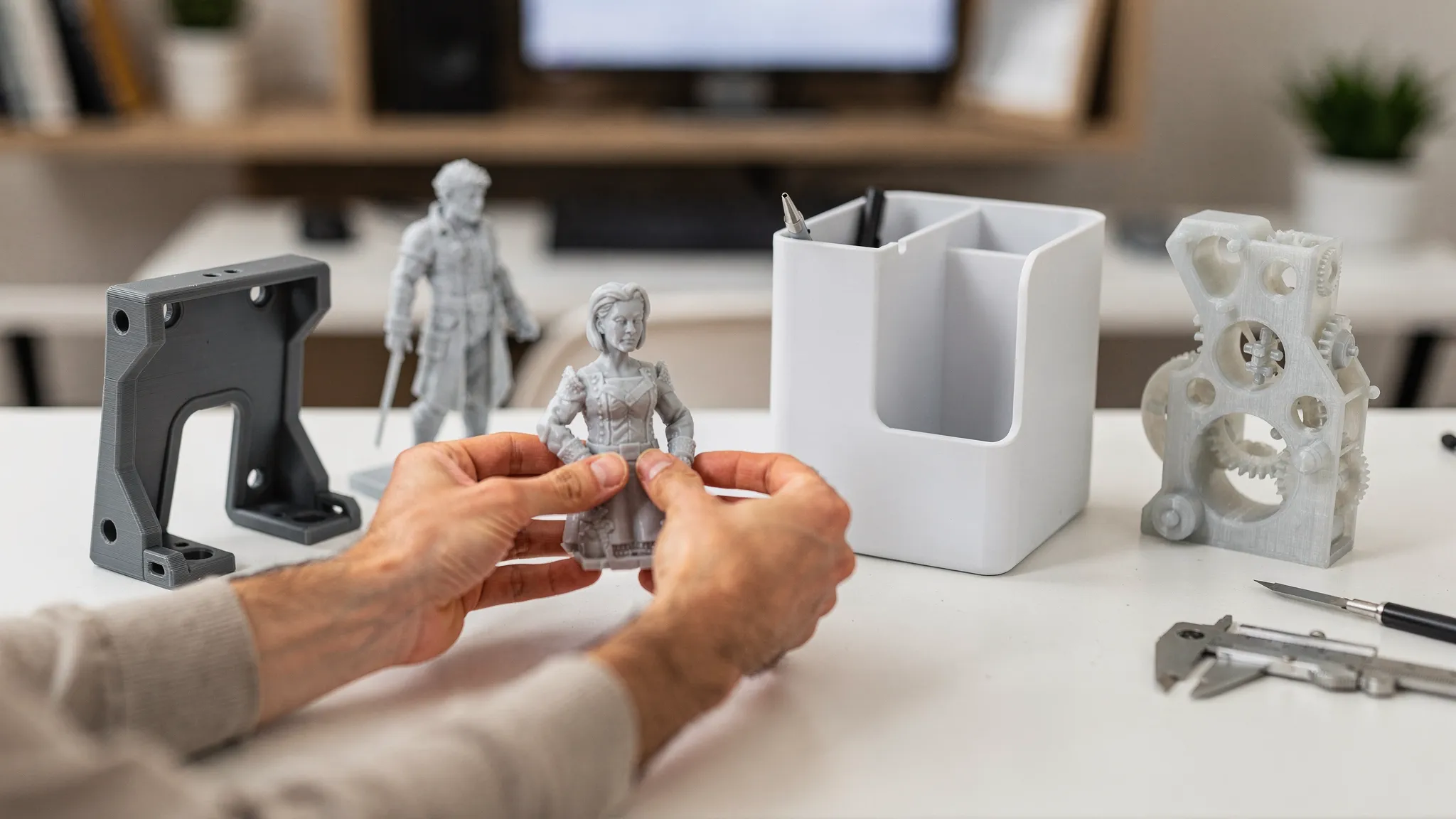
If you are buying your first 3D print, the biggest surprise is usually this: 3D printing is not one product category. It can mean a ready-made collectible, a replacement part, a prototype, a personalized gift, a tabletop accessory, a business sample, or a short run of custom components.
That flexibility is what makes the technology exciting. It is also why first-time buyers sometimes feel unsure about what to order, what material to choose, how pricing works, and what level of finish to expect.
This guide explains all about 3D printing for first-time buyers in plain English, so you can place your first order with realistic expectations and fewer back-and-forth revisions.
What 3D printing actually is
3D printing is a manufacturing method that turns a digital 3D model into a physical object. Instead of cutting material away from a block, most 3D printing processes build the object layer by layer. That is why it is often called additive manufacturing.
For buyers, the most important thing to understand is that the final part depends on three connected choices:
- The 3D model or design file
- The printing process and material
- The finishing and quality requirements
A strong material will not save a model that is too thin. A detailed model may not look sharp if it is printed with the wrong process. A beautiful decorative print may not survive heat, outdoor exposure, or mechanical stress if those conditions were not discussed before ordering.
The good news is that you do not need to become an engineer to buy a great 3D print. You only need to explain what the part is for, share the right details, and choose a printing partner that can help you avoid common beginner mistakes.
The four main ways to buy 3D prints
First-time buyers usually fall into one of four categories. Knowing which one fits you will make the ordering process much easier.
| Buying path | Best for | What you need | Main advantage |
|---|---|---|---|
| Ready-made 3D printed products | Gifts, decor, accessories, hobby items | Product choice, color or option preferences | Fastest and simplest option |
| Print from an existing file | Replacement parts, models, prototypes, custom accessories | STL, 3MF, OBJ, STEP, or similar file | You control the design |
| Custom 3D printing help | Ideas without a finished file | Sketches, measurements, reference photos, use case | Turns an idea into a physical object |
| Small-batch printing | Business samples, event items, product tests | Approved file, quantity, deadline, quality needs | Lower commitment than mass manufacturing |
If you are not sure which path fits, start with your goal. Are you buying something that already exists, or do you need something made specifically for you? Firecloud Printz supports both ready-made designer-authorized prints and custom 3D printing, so buyers can either shop existing products or request an estimate for a unique project.
Common 3D printing methods, explained simply
You do not need to memorize every 3D printing technology, but it helps to know the basic differences. The method affects detail, strength, surface finish, and cost.
FDM printing
FDM, also called filament printing, uses a heated nozzle to lay down melted plastic. It is common for functional parts, prototypes, organizers, mounts, brackets, cosplay pieces, and larger objects.
FDM is often a practical first choice because it offers a good balance of durability, cost, and material options. The tradeoff is that layer lines are usually visible, especially on curved surfaces.
Resin printing
Resin printing uses light to cure liquid resin into solid layers. It is often chosen for highly detailed miniatures, figures, jewelry prototypes, display models, and small decorative pieces.
Resin can capture fine detail very well, but it is typically more brittle than many filament materials. It also requires careful post-processing, including washing and curing.
Powder-based printing
Powder-based processes, such as SLS or similar industrial methods, fuse powdered material into parts. These processes can create complex shapes without the same support structures used in FDM or resin printing.
Powder printing can be excellent for durable functional parts and small batches, but it may not be the most economical option for every simple object.
| Method | Best for | Buyer should know |
|---|---|---|
| FDM | Functional parts, prototypes, larger prints, practical items | Visible layer lines are normal |
| Resin | Fine detail, miniatures, display pieces, crisp textures | More care is needed for durability and handling |
| Powder-based printing | Complex geometry, durable parts, small production runs | Availability and cost vary by provider |
If you are ordering from a service, you do not always need to pick the exact process yourself. Instead, explain the purpose of the item and ask which method makes sense for your budget, deadline, and quality expectations.
Materials matter more than beginners think
Material choice is one of the biggest factors in whether a 3D print feels right for its job. A decorative desk item, outdoor clip, flexible gasket, and detailed figure should not all use the same material.
Here is a simple first-time buyer overview.
| Material type | Common strengths | Common limitations | Good first-time uses |
|---|---|---|---|
| PLA | Affordable, easy to print, good for detail and display | Not ideal for heat or high-stress use | Decor, prototypes, models, organizers |
| PETG | Tougher than PLA, better moisture resistance | Can be less crisp visually than PLA | Functional parts, clips, containers, utility items |
| ABS or ASA | Better heat resistance, tougher for some uses | Needs more controlled printing conditions | Enclosures, outdoor parts, durable components |
| TPU | Flexible, rubber-like feel | More specialized design and printing needs | Bumpers, grips, soft feet, flexible accessories |
| Resin | High detail and smooth finish potential | Can be brittle depending on formulation | Miniatures, figures, display pieces, fine details |
| Nylon or powder materials | Strong, wear-resistant, useful for functional parts | May cost more and need process-specific planning | Hinges, mechanical parts, small-batch components |
Not every provider offers every material, and material names alone do not tell the full story. For example, “resin” can mean many different formulations, from display-focused resin to tougher engineering-style resins. When in doubt, describe the conditions the print must handle.
A useful material request sounds like this: “This part will be used indoors, clipped onto a shelf, handled daily, and should not snap if bumped.” That gives the print provider far more useful information than simply saying, “Make it strong.”
What affects the price of a 3D print?
3D printing prices are not based only on the amount of plastic or resin used. The total estimate usually reflects several factors working together.
The most common cost drivers are size, print time, material, support requirements, detail level, post-processing, quantity, and deadline. A small detailed resin figure may take more preparation than a larger simple bracket. A hollow-looking model may still require supports, cleanup, or orientation work. A part that needs tight fitment may require test prints or adjustments.
For first-time buyers, the best way to avoid surprise costs is to share your priorities early. Tell the shop whether you care most about low cost, appearance, strength, speed, or dimensional accuracy. You may not be able to maximize all of those at once, but you can usually find a good balance.
If you want a deeper look at ordering details, Firecloud Printz has a helpful guide on what you need before you 3D print from a file.
What quality should you expect from your first print?
A 3D print is not always supposed to look like an injection-molded store product. Depending on the process, you may see layer lines, support marks, slight texture, small color variations, or visible seams. These are not automatically defects. They are often normal signs of the manufacturing method.
That said, a well-made print should still match the agreed purpose. A decorative print should look clean from normal viewing distance. A functional part should fit within reasonable expectations. A prototype should represent the shape, size, and features needed for testing.
The word “quality” means different things depending on the job. For a display model, quality may mean crisp detail and a smooth finish. For a bracket, quality may mean correct dimensions and strength in the right direction. For a small batch of products, quality may mean repeatability across multiple pieces.
Before ordering, decide which quality standard matters most:
- Appearance quality, for display and gifts
- Fit quality, for parts that connect to other objects
- Strength quality, for functional or load-bearing use
- Detail quality, for miniatures and sculpted models
- Batch consistency, for multiple copies
This helps your print provider choose orientation, layer height, material, and finishing steps more intelligently.
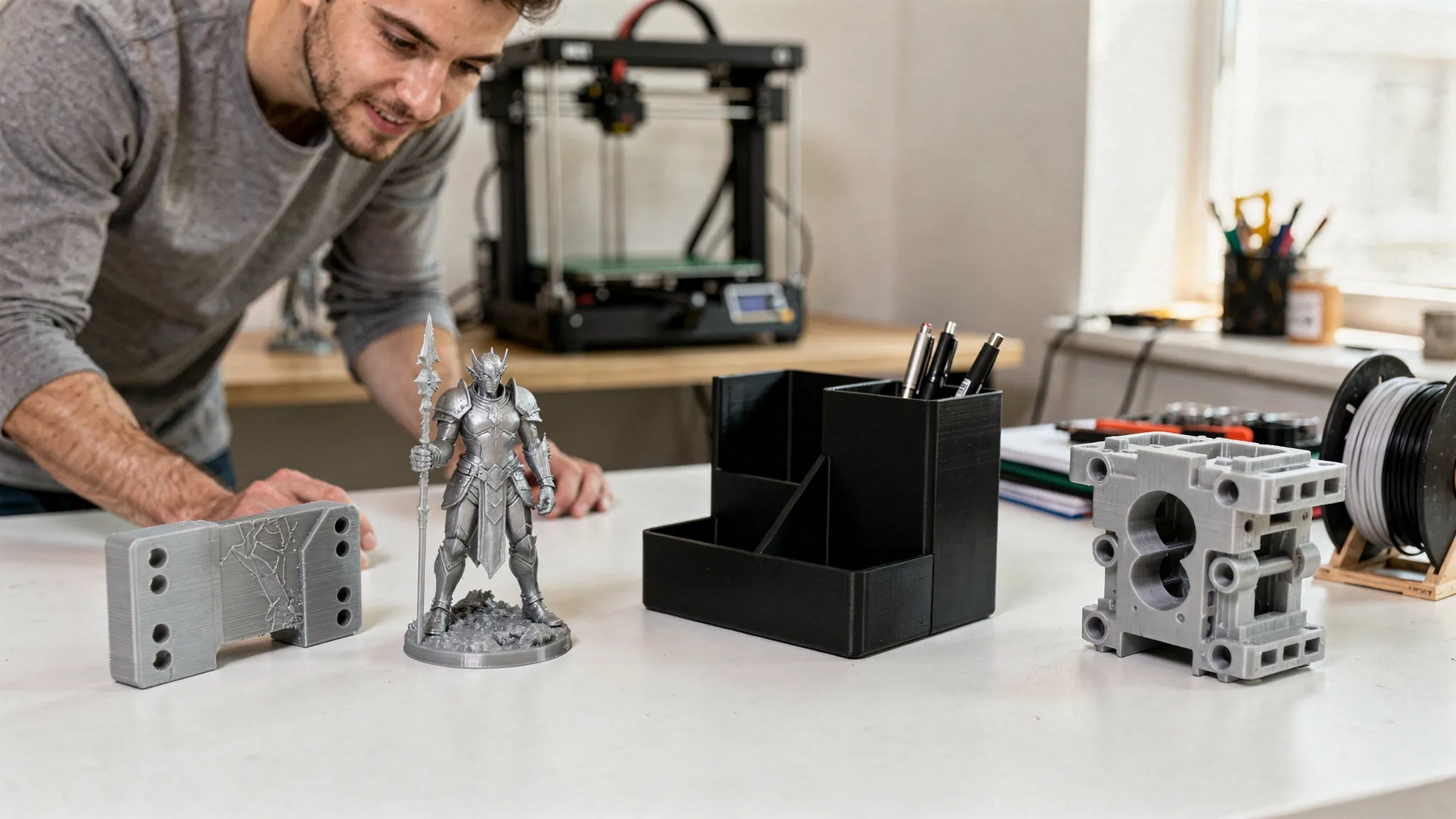
What to prepare before requesting a quote
You can get a better estimate, and often a better final print, by preparing a few details before contacting a print service.
At minimum, try to provide the 3D file if you have one, the desired size, the purpose of the object, the quantity, the material or finish preference, and your deadline. If the print must fit another object, include measurements or reference photos. If the part replaces something broken, photos of the original part from multiple angles can help.
A strong first request might say:
“I have an STL file for a replacement drawer handle. It needs to fit two existing screw holes spaced 96 mm apart. It will be used indoors and pulled daily. I care more about strength than a perfectly smooth finish. I need two copies, preferably in black.”
That kind of message helps the shop understand the print’s real job. It also reduces the chance of ordering a part that looks right but fails in use.
File types first-time buyers should know
Most 3D print orders start with a digital model. The most common file types are STL, 3MF, OBJ, and STEP.
STL is widely used and accepted by many print services, but it usually does not store color, material, or detailed manufacturing instructions. 3MF can include more information and is often helpful for modern workflows. OBJ is common for models with visual surface data. STEP is often used for engineering-style CAD models and can be useful when dimensions or mechanical features matter.
If you are downloading a model from a marketplace or designer, check the license. Some files are for personal use only. Others allow commercial printing or authorized selling. Firecloud Printz offers designer-authorized prints in its shop, which can be a simpler choice if you want a legitimate ready-made item without navigating file permissions yourself.
What 3D printing is great for
3D printing is especially useful when the item is custom, low-volume, hard to find, personalized, or still being tested. It shines when you do not want to pay for molds, tooling, or a large manufacturing run.
Common first-time buyer projects include replacement knobs, brackets, organizers, custom signs, gaming accessories, tabletop terrain, prototypes, display stands, cosplay pieces, personalized gifts, and product mockups.
It is also useful for businesses that want to test a design before committing to a larger production method. A first prototype does not need to be perfect. It needs to teach you something useful about fit, shape, scale, or customer reaction.
For a broader overview of ordering through a service, see Firecloud Printz’s 3D printing guide for services, costs, and expectations.
What 3D printing is not ideal for
3D printing is powerful, but it is not the answer to every problem. It may not be the right choice for high-volume mass production, certified safety parts, high-heat environments, food-contact items without proper material verification, or parts that must meet strict engineering standards.
Be cautious with anything involving electricity, vehicles, medical use, child safety, structural loads, plumbing pressure, or legal compliance. A 3D printed object can be great for a prototype, cover, organizer, label, jig, or non-critical accessory, but that does not mean it should replace a certified component.
For example, a printed clip or organizer might help around a utility area, but a leaking pipe, drain backup, sewer issue, or water treatment problem should be handled by licensed professionals, such as plumbing and drain experts who can diagnose the real system issue safely.
The safest rule is simple: if failure could cause injury, property damage, contamination, or code problems, ask a qualified professional before using a printed part.
How to choose between ready-made and custom
Ready-made 3D printed products are best when you like an existing design, want a straightforward purchase, or need something quickly. Custom printing is best when the item must fit a specific space, match a unique purpose, include personalization, or solve a problem that off-the-shelf products do not address.
Choose ready-made if you care about convenience. Choose custom if you care about fit, function, personalization, or solving a specific problem.
There is also a middle ground. You may start with an existing model and ask for changes to size, color, material, or finish, if the license and design allow it. This can be a cost-effective path, but it still requires checking whether the model can be modified and printed successfully.
First-order mistakes to avoid
Most first-time 3D printing mistakes come from missing information, not from bad intentions. Buyers often assume a shop automatically knows how the item will be used, but a digital file alone does not explain the full context.
Avoid these common issues:
- Ordering a part without confirming the final dimensions
- Choosing a material based only on color or price
- Expecting all surfaces to be perfectly smooth without post-processing
- Forgetting that functional parts need clearances and tolerances
- Printing copyrighted or unlicensed designs without permission
- Assuming a thin decorative model will be strong enough for daily use
- Waiting until the last minute for a complex or high-detail order
If your print has to fit, move, snap, flex, screw together, or hold weight, say that clearly before production. That information can change the recommended material, orientation, wall thickness, and even whether a test print is wise.
A simple checklist before you buy
Use this quick checklist before placing your first 3D printing order.
| Question | Why it matters |
|---|---|
| What is the object for? | Determines material, strength, detail, and finish priorities |
| Does it need to fit another part? | Requires accurate dimensions and tolerances |
| Will it be indoors or outdoors? | Affects material choice and durability |
| Will it face heat, moisture, stress, or sunlight? | Helps prevent warping, cracking, or early failure |
| Is appearance or strength more important? | Guides process, orientation, and finishing choices |
| Do you have rights to print the model? | Avoids licensing and copyright problems |
| How many do you need? | Affects production planning and consistency |
| When do you need it? | Helps set realistic turnaround expectations |
If you can answer most of these, you are ready to request an estimate.
How Firecloud Printz helps first-time buyers
Firecloud Printz focuses on high-quality custom 3D printing and ready-made designer-authorized products. That makes it a practical starting point whether you already have a file, want to shop curated designs, or need help turning an idea into something physical.
For first-time buyers, the biggest benefit of working with a print service is guidance. You do not need to buy a printer, learn slicer settings, troubleshoot failed prints, store materials, or manage post-processing. You can focus on the idea, purpose, and final result.
Firecloud Printz also supports quick order estimates, multiple material options, online shopping and cart functionality, secure payments, and customer support. If you are unsure whether your project is ready, it is better to ask early than to guess your way into a disappointing result.
Frequently Asked Questions
Do I need a 3D model before ordering a 3D print? Not always. If you want a ready-made product, you can buy from a shop without providing a file. If you want something custom, a 3D file helps, but sketches, measurements, and reference photos may be enough to start a conversation.
What is the best material for a first 3D print? It depends on the use. PLA is often good for simple display items and prototypes. PETG is commonly chosen for tougher functional parts. Resin is useful for fine detail. The best choice depends on strength, detail, environment, and budget.
Will my 3D print be perfectly smooth? Not always. Many prints have visible layer lines or small support marks. Smoother results may require a different process, finer settings, sanding, priming, painting, or other finishing steps.
Can 3D printed parts be strong? Yes, but strength depends on material, design, wall thickness, orientation, and print settings. A well-designed printed part can be very useful, but safety-critical parts need extra caution and professional review.
How long does a 3D print order take? Turnaround depends on size, material, complexity, queue, post-processing, and quantity. Simple ready-made products may be faster than custom parts that require file review, adjustments, or test prints.
Is it cheaper to buy a 3D printer or use a service? If you print often and enjoy learning the process, owning a printer may make sense. If you only need occasional parts, high-detail results, multiple material options, or less troubleshooting, a professional service is often easier.
Ready to buy your first 3D print?
Your first 3D printing order does not have to be complicated. Start with the purpose, gather your dimensions or file, decide what matters most, and ask questions before production begins.
Whether you want a unique ready-made print, a custom part, a prototype, or a small batch, Firecloud Printz can help bring your idea to life with detail, efficiency, and practical guidance. Visit Firecloud Printz to explore the shop or request a custom 3D printing estimate.
