
3D Printer: What Can You Print? Real-World Examples
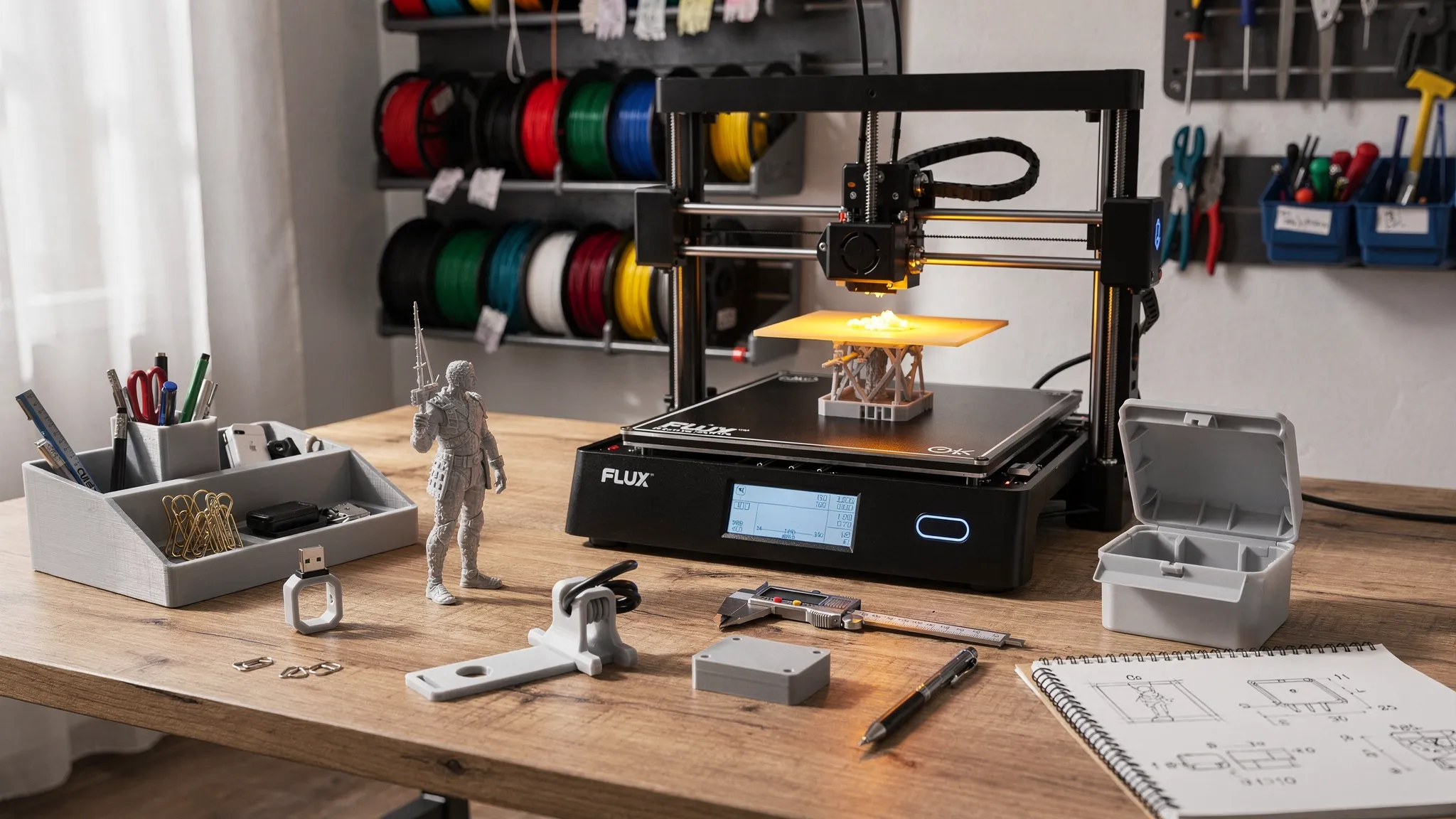
If you are new to 3D printing, the most helpful way to think about it is this: a 3D printer is a tool for making one thing you need right now, in the exact shape you need, without waiting for a factory run.
So, what can you print with a 3D printer? A lot, from simple organizers and replacement clips to detailed miniatures, custom brackets, prototypes, and low volume production parts.
Below are real world examples (the kinds people actually print), plus practical notes on materials, durability, and when it is smarter to use a printing service.
The big categories of things people actually 3D print
Most prints fall into a few repeatable buckets. Knowing these helps you decide whether 3D printing is the right approach.
| Category | What you print | Why 3D printing works here | Typical considerations |
|---|---|---|---|
| Home + organization | Hooks, bins, cable guides, drawer dividers | Custom fit to your space, quick iteration | Heat resistance near appliances, strength at mounting points |
| Repairs + replacement parts | Clips, knobs, brackets, covers | Replaces discontinued parts, fast turnaround | Dimensional accuracy, wear surfaces, fastening method |
| Hobby + display | Miniatures, cosplay props, display stands | Detail, customization, unique shapes | Surface finish, paint prep, lightweight strength |
| Prototyping | Concept models, test housings, ergonomic shapes | Iterate fast, adjust CAD and reprint | Clearances, tolerances, repeatability |
| Business operations | Jigs, fixtures, gauges, tool organizers | Improves workflow without tooling cost | Material choice for repeated use, documentation |
| Small batch production | Low volume end use parts, custom accessories | On demand manufacturing, less inventory | Consistency, post processing, QC plan |
If you want a deeper overview of processes and materials (without getting lost in jargon), Firecloud Printz breaks it down in Additive Printing Explained: Materials, Uses, and Benefits.
Home and everyday life: useful prints that solve small annoyances
These are some of the most common “first successful prints” because they are forgiving and immediately useful.
Cable management and desk organization
Examples people print constantly:
- Under desk cable channels and clips
- Headphone hooks and controller mounts
- Battery organizers and small parts trays
Why it works: you can match the exact thickness of your desk, the cable diameter, and your preferred screw or adhesive mounting.
Practical tip: if a clip will flex repeatedly (snap on, snap off), ask for a material that handles fatigue better than basic “display” plastics.
Kitchen and pantry organization
Useful examples:
- Bag clips and scoop holders
- Stackable bin dividers
- Custom labels and stencil guides
Important caution: food contact is a specialized topic. Many common 3D printed plastics and typical layer lines can be hard to clean thoroughly. If your part will directly contact food, treat it as a design and material selection project, not a casual print.
Custom hooks, brackets, and mounts
People regularly print:
- Wall hooks shaped for specific items (keys, leashes, headsets)
- Mounting brackets for routers, small devices, or sensors
- Spacer blocks and alignment shims
Design note: brackets fail at stress risers. Adding fillets (rounded corners) and increasing thickness around screw holes often matters more than making the overall part bulky.
Repairs: replacement parts you cannot easily buy
One of the most satisfying uses of 3D printing is “this broke, and the manufacturer does not sell it.”
Common examples:
Appliance and household replacement parts
- Fridge door bin clips
- Vacuum accessory adapters
- Fan knobs and battery covers
What to watch: parts near motors, heaters, or dishwashers may need better heat resistance than basic entry level materials.
Furniture and hardware fixes
- Drawer slide spacers
- Chair glides and feet
- Closet rod brackets
Good candidate test: if the part is mostly plastic, not safety critical, and you can measure it accurately, it is often a great 3D printing job.
Automotive “interior and convenience” parts
- Trim clips
- Dash accessory mounts
- Cable routing clips
Caution: avoid printing parts that affect braking, steering, airbags, or structural safety. 3D printing can be strong, but designing and validating safety critical parts is a different level of engineering.
Hobbies and collectibles: where detail and customization shine
This is where 3D printing feels like magic, especially with high detail processes.
Tabletop gaming and miniatures
Real examples:
- Miniatures and busts
- Terrain tiles and modular scenery
- Token trays and dice towers
Why it works: you can customize scale, pose, base style, or add nameplates. If you want guidance on picking a model that will actually print cleanly, see How To Choose a 3D Model for 3D Printer Success.
Cosplay and props
Common prints include:
- Helmet shells (often printed in sections and assembled)
- Armor plates and costume accessories
- Prop components like handles, greebles, and emblems
Practical workflow: many cosplayers print a “draft” at lower detail to confirm scale and comfort, then print the final version with better surface finish for paint.
Display stands and custom mounts
- Stands for figurines and collectibles
- Wall mounts for instruments or sports gear
- Custom signage and logos
If you like designer collectibles, Firecloud Printz also offers a curated shop of designer authorized prints, which is a safer route than questionable file sources.
Electronics and maker projects: enclosures, brackets, and adapters
3D printing is a standard tool for hobby electronics because it turns a messy prototype into something that looks intentional.
Enclosures and cases
Examples:
- Sensor boxes for garages and gardens
- Small instrument cases
- Battery pack holders
Design considerations:
- Leave clearance for connectors and cable bend radius
- Add bosses for screws or heat set inserts (if used)
- Plan ventilation if there is heat
Mounts and adapters
- Camera and light mounts
- Tripod adapters
- Tool attachments
These parts often need a balance: stiff enough to hold alignment, tough enough not to crack at the fasteners.
School and education: models that make concepts tangible
Teachers and students print physical objects that are hard to understand on a screen.
Examples:
- Geometry demonstrations and math manipulatives
- Molecular or crystal structure models
- Topographic maps and terrain cross sections
- Historic artifacts and replicas for classroom handling
A bonus of 3D printing here is accessibility: tactile learning models can help students who benefit from hands on instruction.
Business use: prototypes, fixtures, and small batch parts
A lot of business value comes from prints that never appear in marketing photos.
Product development prototypes
Examples:
- Form models for size and aesthetics
- Fit checks to confirm assembly clearances
- Functional prototypes for basic mechanism tests
If your prototype includes moving parts or snap fits, tolerances matter. A practical guide is 3D Designs for 3D Printer: Supports, Overhangs, Tolerances.
Jigs, fixtures, and shop aids
Common examples:
- Drill guides
- Assembly alignment fixtures
- Part trays with labeled pockets
Why it works: you can tailor the tool to your exact workflow, then revise it in a day if the process changes.
Sales, events, and retail
Examples:
- Product mockups for demos
- Branded display stands
- Custom packaging inserts (for low volume)
Operational note for businesses: if you are selling physical goods, make sure you also understand your compliance responsibilities. Some categories trigger federal excise tax reporting, and using an IRS authorized provider to e-file IRS Form 720 online can simplify the process.
Wearables and personal accessories
These prints are popular because the “custom fit” advantage is huge.
Examples:
- Glasses stands and cases
- Watch stands and strap organizers
- Custom name tags and keychains
For wearables that touch skin for long periods (bracelets, headset parts), material choice and surface finish matter for comfort.
Outdoor and travel: lightweight, field friendly solutions
Examples:
- Tent stake caps and guy line tensioners
- Bike accessory mounts
- Custom protective caps and plugs
Keep in mind: outdoor sun and heat can be harsh on some plastics. If a part sits in a hot car or direct summer sun, ask about UV and heat resistance options.
What you generally should not print (or should be cautious about)
3D printing is powerful, but it is not a shortcut around physics, regulations, or safety testing.
Be cautious with:
- Safety critical parts: anything where failure could cause injury (vehicle safety components, load rated climbing parts, etc.)
- High heat applications: near stoves, engines, or continuous high temperature environments unless you select an appropriate material
- Pressure vessels and high stress fluid fittings: leaks and bursts can be dangerous
- Medical or dental devices: requires specialized materials, biocompatibility standards, and regulated workflows
- Weapon components: legality varies by location, and many service providers will not print them
If you are unsure, describe the use case and environment when requesting a quote. A good print partner will tell you if the design needs changes.
How to decide what to print first (a quick, practical filter)
If you are staring at a list of ideas, pick your first project using these questions:
Is the goal function, appearance, or both?
- Function first: choose a simple geometry and prioritize durability and fit.
- Appearance first: choose a model designed for printing with clean surfaces and realistic details.
Does it need to handle heat, sun, or repeated impacts?
This drives material selection more than almost anything else. A desk organizer can be very different from a part used in a car interior.
Does it need precision or moving clearances?
If parts must slide, snap, or hinge, plan for tolerances. Many “it looked right in CAD” failures come from not leaving enough clearance.
Is the model actually printable as is?
Even great looking files can fail due to thin walls, steep overhangs, or fragile features. Firecloud Printz covers what to check in 3D Printing Designs: What Makes a Model Easy to Print.
When a 3D printing service makes more sense than DIY
Owning a printer is great, but a service is often the faster path when:
- You need high detail surface quality for a presentation, gift, or collectible
- You want multiple material options without buying and tuning for each one
- You need predictable results for a deadline
- The part is large, complex, or needs careful orientation and post processing
Firecloud Printz offers both ready made designer authorized items and fully custom 3D printing, so you can order a proven product or submit your own file.
Frequently Asked Questions
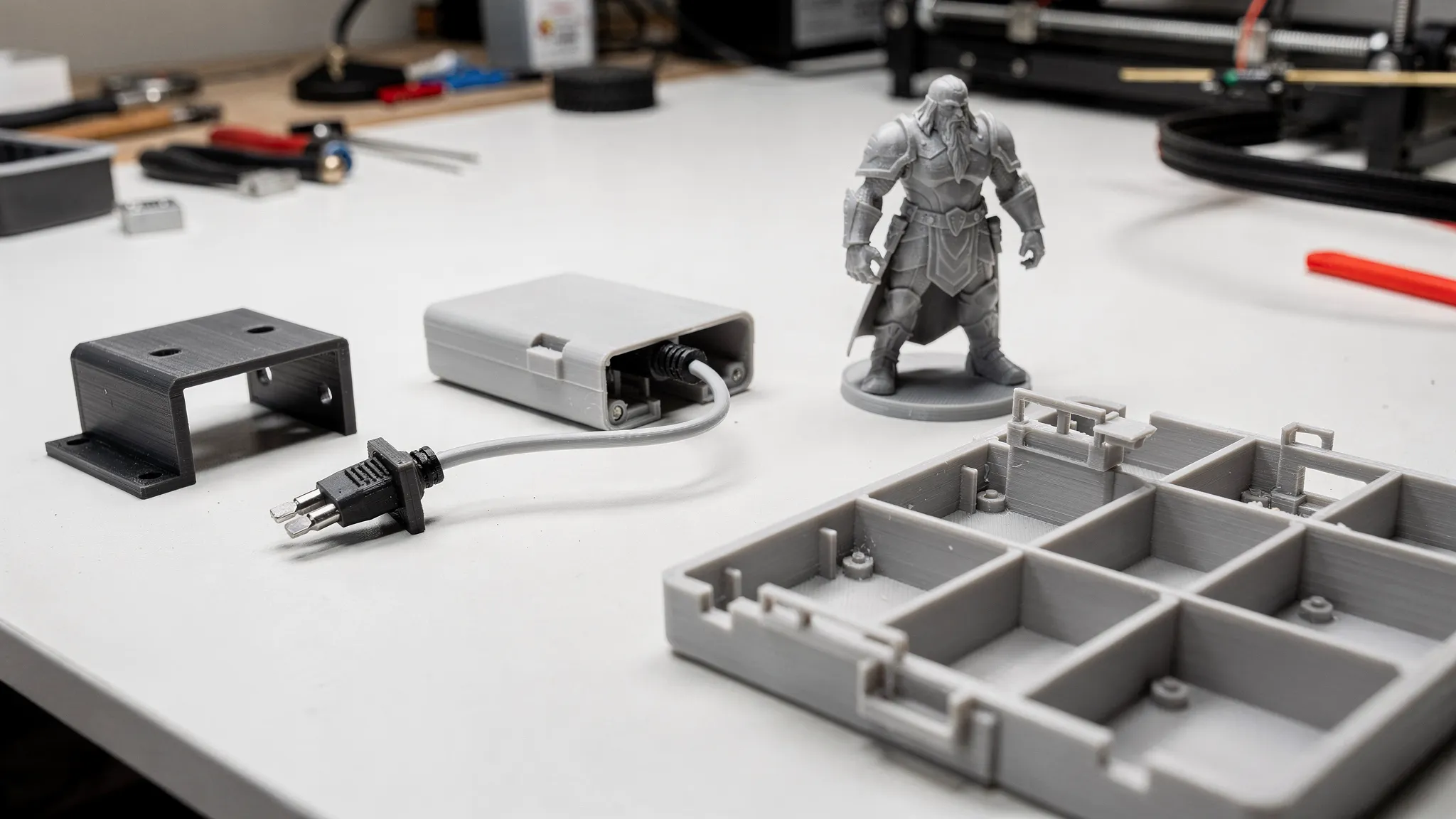
What can you print with a 3D printer as a beginner? Useful beginner prints include cable clips, desk organizers, small brackets, and simple replacement parts with thicker walls and minimal overhangs.
Can a 3D printer make functional parts or only decorations? It can make functional parts, especially for low to moderate stress uses like brackets, adapters, enclosures, jigs, and fixtures. Material choice and design quality determine how functional it is.
What is the most practical thing to 3D print at home? Custom organization and repair parts are often the most practical because they solve specific fit problems and can replace hard-to-find plastic components.
Can you 3D print parts for a car? Yes for non-safety items like interior mounts, trim clips, and organizers, but avoid safety critical components. Heat and UV exposure also require careful material selection.
Do I need a perfect 3D model to get a good print? You need a printable model, not necessarily perfect. Common issues like thin walls, non-manifold geometry, and missing clearances can often be fixed or redesigned before printing.
Bring your idea to life with Firecloud Printz
If you have a specific object in mind (a replacement clip, a custom bracket, a prototype housing, or a high detail collectible), Firecloud Printz can help you turn the concept or 3D file into a finished part with a fast, straightforward ordering process.
Explore the Firecloud Printz shop for designer authorized prints, or request a custom order when you are ready to produce something made for your exact use case.
